

Teaching a puppy to be alone works best when it feels ordinary and predictable rather than dramatic and stressful.
If you are building a bigger early-ownership routine, our bringing home a new puppy guide can help you connect this topic to the rest of the puppy plan.
Key Takeaways
- Start with very short, winnable reps.
- Build alone time when the puppy is already calm, fed, and rested.
- Confidence grows from repetition, not from one long test.
- Returning while the puppy is still under threshold helps preserve progress.
- The goal is calm recovery, not silent endurance at all costs.
Set the puppy up before you step away
The easiest sessions usually happen after potty, after some light activity, and before the puppy gets overtired. Puppies left when they are already wired or frustrated often struggle more than they need to.
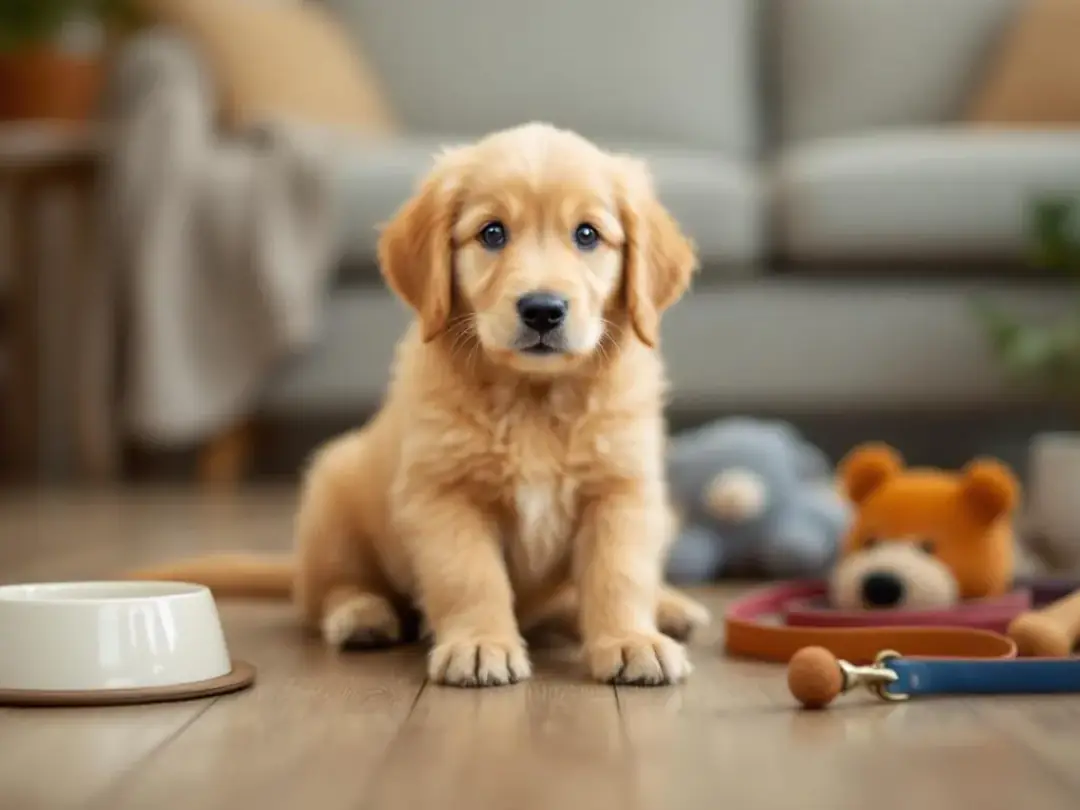
Environment matters too. A comfortable, familiar setup lowers stress before training even begins.
Make the first reps almost boring
Many owners move too fast because the first few absences feel easy. It is often smarter to repeat very short successful reps than to test the puppy with a long disappearance right away.
That gradual approach helps the puppy learn that being alone is safe and temporary, not unpredictable.
Watch the puppy, not the clock
Some puppies can handle longer stretches quickly, while others need smaller progressions. The better metric is how the puppy recovers, not whether you hit a target number of minutes on day one.
If the puppy is still adjusting to the household, our separation anxiety vs normal settling-in guide can help you read the behavior more clearly.
Keep the rest of the day supportive
Enough sleep, enough potty breaks, and a predictable routine make alone training much easier. Many puppies seem bad at being alone when they are really just overtired or under-structured.
Calm independence is usually part of a bigger schedule, not an isolated trick.
Quick Comparison Table
| Training Step | Goal | What Helps |
|---|---|---|
| Very short absence | Show the puppy you always return | Start when the puppy is calm |
| Repeat easy reps | Build confidence through success | Do not rush the timeline |
| Lengthen gradually | Protect recovery while increasing duration | Watch behavior, not just minutes |
| Generalize to normal life | Make alone time ordinary | Pair it with a predictable daily routine |

Final Thoughts
Start with very short, winnable reps.
How to Teach a Puppy to Be Alone Without Panic becomes much easier to manage when owners stop searching for one perfect formula and instead match expectations to the dog, stage, and household in front of them.
In most cases, the best result comes from steady routines, realistic pacing, and enough flexibility to adjust when the dog or situation changes.
How This Usually Plays Out Day to Day
How to Teach a Puppy to Be Alone Without Panic usually feels harder in real life than it looks on paper because dogs do not repeat a skill the same way in every room, every mood, or every level of excitement. Owners often remember one great day and expect the same response the next day, but behavior tends to wobble when sleep, novelty, frustration, or arousal shift. That is why consistent routines and easier practice setups usually matter more than trying a brand-new technique every time progress dips.
In many homes, the most helpful change is not doing more, but making the task clearer. A dog that can handle how to teach a puppy to be alone without panic in a quiet room may still struggle in the yard, on a walk, or when guests are around. Breaking the problem into smaller repetitions gives the dog a real chance to succeed and gives the owner cleaner information about what is improving and what still needs work.
The answer also changes with sleep quality, mental work, reinforcement history, and exercise level. Those details explain why one dog can bounce back quickly while another needs a slower plan. Looking at the pattern instead of one frustrating moment helps owners adjust the routine without assuming the dog is stubborn or that earlier training was wasted.
What Changes the Result Most
The biggest mistake owners make with how to teach a puppy to be alone without panic is assuming the problem is purely about obedience. More often, it is a combination of exercise level, distractions, and reinforcement history. When one of those pieces is off, the dog spends more time reacting and less time thinking. That is why improving naps, predictability, and training setup often changes behavior faster than adding more verbal corrections.
The environment matters too. A dog that can settle in the house may still struggle at the front door, in a busier neighborhood, or around other dogs because daily routine, mental work, and sleep quality are adding pressure at the same time. Instead of asking the dog to be perfect everywhere, it is usually smarter to make the hard setting easier and build back up in layers.
Owners should also notice what happens right before the unwanted pattern appears. The few minutes before the problem often contain the real clue, such as boredom, frustration, overexcitement, or a routine that changed just enough to unsettle the dog.
How to Make the Advice Fit Your Household
The plan around how to teach a puppy to be alone without panic should fit the household as well as the dog. A routine that depends on perfect timing, long training blocks, or constant supervision often collapses as soon as work, school, or guests interrupt the day. Most families get better results from a simpler routine that can still happen when life is busy.
That may mean shorter sessions, fewer cues per session, easier management tools, or more deliberate rest periods. When the human plan is realistic, the dog gets more consistent information, and consistency is usually what turns scattered progress into dependable progress.
A Practical Plan for the Next Week
A useful plan for how to teach a puppy to be alone without panic should be specific enough to follow on an ordinary day and flexible enough to survive a busy week. Owners usually make better progress when they choose a handful of repeatable actions rather than trying to fix everything at once.
- Keep training sessions short enough that the dog can still make good choices
- Practice easiest versions of the skill before raising distractions again
- Protect sleep and decompression so overarousal does not drive the whole day
- Reward the exact behaviors you want repeated instead of correcting every mistake
- Write down what time of day, place, or trigger makes the issue hardest
A practical weekly plan for how to teach a puppy to be alone without panic usually works best when owners reduce difficulty on purpose. Choose one or two situations where the dog can still succeed, repeat them often, and only then ask for the skill in a harder place. That keeps training honest and makes progress easier to measure.
That kind of structure also makes progress easier to notice. Instead of asking whether everything is fixed, owners can ask whether recovery is faster, the dog needs less help, or the routine feels easier to repeat than it did two weeks ago. Small improvements are often the clearest sign that the plan is moving in the right direction.
Why Life Stage Changes the Answer
Life stage is one reason owners get mixed advice about how to teach a puppy to be alone without panic. A young puppy, an adolescent dog, a healthy adult, and a senior dog can all need different pacing, recovery, and expectations. Advice that sounds contradictory often makes more sense once the dog’s age, maturity, and previous experience are taken into account.
That is why it helps to re-evaluate the plan over time instead of assuming the first version should last forever. What supports progress this month may need to be adjusted a few months from now as the dog becomes more capable, more sensitive, or less physically comfortable.
What Usually Changes Over the Next Stage
Many owners feel more confident once they understand that how to teach a puppy to be alone without panic is not static. What feels difficult now may become easier as the dog matures, gains experience, or settles into a more predictable routine. That possibility matters because it keeps owners focused on building skills that will continue paying off later.
At the same time, improvement is rarely automatic. Dogs usually benefit when owners actively revisit the plan at each new stage and decide what should be repeated, what should be simplified, and what the dog may finally be ready to handle.
Common Mistakes That Slow Progress
One common mistake with how to teach a puppy to be alone without panic is raising difficulty faster than the dog can handle because the dog did well once or twice in an easier setup. That usually creates a cycle where owners ask for too much, the dog struggles, and both sides become more frustrated. Staying at the edge of success for a little longer usually produces better long-term reliability than constantly testing the hardest version.
Another mistake is treating every off day like a behavior emergency. Dogs have uneven days. If owners respond by changing rules, rewards, and expectations every time, the pattern becomes even harder to read. A steadier approach makes it easier to tell whether the dog truly needs a new plan or simply needs the current plan repeated longer.
How to Review the Plan After the First Adjustment
After one or two weeks, owners should review how to teach a puppy to be alone without panic by asking where the dog is succeeding more easily, not only where the dog still struggles. If the dog is recovering faster, taking guidance sooner, or making fewer impulsive mistakes in easier setups, the plan is likely moving in the right direction even if the hardest situations are not ready yet.
If nothing is improving, the next adjustment is usually to make the environment easier, shorten the session, or increase rest and decompression before trying a completely different method. Clearer practice usually helps more than piling on more intensity.
When to Get More Help
If the dog seems to unravel more each day, it is worth asking whether the plan is too hard, the dog is not sleeping enough, or the household is accidentally rewarding the wrong moments. A trainer can be especially useful when arousal, fear, or frustration are hard to read in real time. Getting eyes on the routine is often more helpful than collecting more tips online.
FAQ
Common Questions About How to Teach a Puppy to Be Alone Without Panic
These quick answers cover the questions owners usually ask when this topic starts affecting day-to-day routine.
What does How to Teach a Puppy to Be Alone Without Panic usually look like in everyday life?
How to Teach a Puppy to Be Alone Without Panic is usually easiest to understand when families focus on what is happening day to day, not just the headline question.
Which changes matter most with How to Teach a Puppy to Be Alone Without Panic?
The most important changes are the ones that affect comfort, routine, behavior, or decision-making at home.
Which concerns come up most often with How to Teach a Puppy to Be Alone Without Panic?
Owners usually want to know what is normal, what deserves closer attention, and what practical next step makes the most sense.
When is outside help worth getting for How to Teach a Puppy to Be Alone Without Panic?
If symptoms worsen, routines stop working, or you feel unsure how to respond, it is worth checking with your veterinarian or another trusted professional.
How can families prepare better for How to Teach a Puppy to Be Alone Without Panic?
Families usually do best when they plan ahead around schedule, setup, safety, and what kind of support may be needed.
What do owners misunderstand about How to Teach a Puppy to Be Alone Without Panic most often?
A common misunderstanding is assuming every dog needs the same answer, when age, temperament, health, and routine often change the right approach.


