
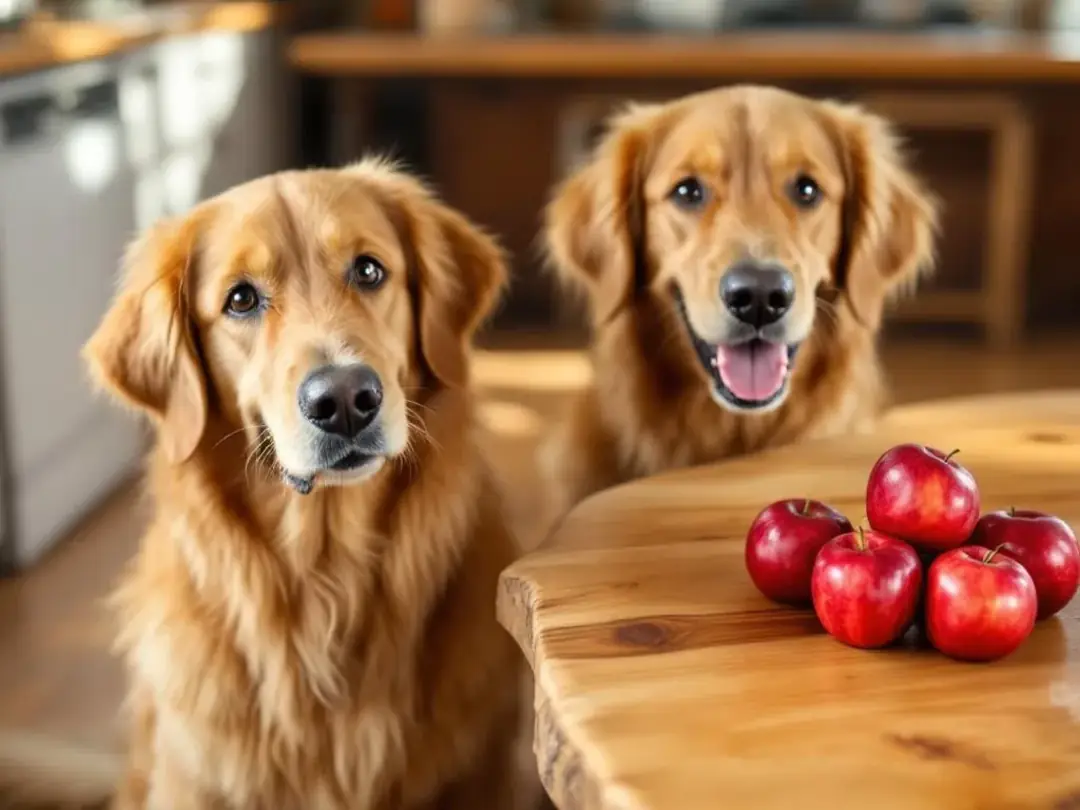

Yes, dogs can eat plain apple flesh in small amounts, and many dogs enjoy the crunch. The important part is preparation: remove the core, seeds, and stem, then serve apple as a treat rather than a main food.
If you are building a safe snack list, compare apples with our strawberries for dogs guide and watermelon for dogs guide.
Key Takeaways
- Plain apple slices can be safe for many dogs in moderation.
- Remove seeds, core, and stem before serving.
- Avoid apple pie, sweetened applesauce, caramel apples, and products with xylitol or heavy spices.
- Start small, especially with puppies or dogs with sensitive stomachs.
- Treats should remain a small part of the total diet.
How to Serve Apples Safely
Wash the apple, remove the stem, core, and seeds, then cut the flesh into small pieces. For small dogs or puppies, thin slices or tiny cubes are safer than large chunks.
Apple skin is usually fine for many dogs, but it can be harder for some sensitive stomachs. If your dog is prone to digestive upset, start with a very small amount.
Why Seeds and Core Matter
Apple seeds contain trace amounts of cyanide compounds, and the core or stem can be a choking or blockage risk. A few accidental seeds are not usually the same as a whole unsafe meal, but the safe habit is to remove them every time.
For sensitive puppies, use apples sparingly and review our sensitive puppy treats guide.
Apple Serving Table
| Apple item | Safe? | Notes |
|---|---|---|
| Plain apple flesh | Usually yes | Small pieces, moderation |
| Apple seeds/core | No | Remove before serving |
| Unsweetened applesauce | Sometimes | Small amount, no additives |
| Apple pie | No | Sugar, fat, spices |
| Caramel apple | No | Sugar, sticky coating, possible hazards |
Portion and Treat Balance
Apple should be a small treat, not a large part of the diet. Too much fruit can cause gas, soft stool, or extra calories. Use a few pieces and watch your dog’s response.
If treats are getting frequent, our treat quantity guide can help keep the whole diet balanced.
When to Avoid Apples
Avoid apples if your dog has a medical reason to limit sugar, has a history of fruit-related digestive upset, or is on a veterinarian-directed diet where extras are restricted. Also avoid any apple product with xylitol or unknown sweeteners.
If your dog eats a large core, many seeds, or a product with unsafe ingredients, call your veterinarian or a pet poison resource for guidance.
How to Add Apples Without Upsetting the Diet
Introduce apples like any new treat: a small amount, plain, and on a day when the rest of the diet is normal. That way, if stool changes, you are not guessing between five new foods.
For training, apple pieces should be tiny. Large fruit chunks can be messy, distracting, or too much sugar at once, especially for small dogs and puppies.
Apple Treat Ideas That Stay Simple
Use apple pieces as an occasional crunchy reward, freeze tiny pieces for a cool snack, or mix a small amount of plain unsweetened applesauce into a lick mat if your dog tolerates it. Keep the serving small and avoid turning fruit into a daily calorie pile.
For dogs who gulp, use thin slices or small diced pieces instead of wedges. Safer serving size is not only about calories; it is also about chewing, swallowing, and preventing choking.
Final Thoughts
Families reading about can dogs eat apples should separate keep them plain from small, then use seed-free to choose a realistic plan.
Common Questions
FAQ
For Can Dogs Eat Apples, the answer depends on portion size, stomach tolerance, and how consistently the pattern repeats. Use that pattern before making a larger change.
Can puppies eat apples?
Many puppies can have tiny plain apple pieces, but start small and remove seeds, core, and stem.
Can dogs eat apple skin?
Many can, but some sensitive dogs digest peeled apple more easily.
Can dogs eat applesauce?
Only plain unsweetened applesauce in small amounts, with no xylitol or spices.
Are apple seeds dangerous for dogs?
They should be removed. Seeds contain trace toxins and are not worth the risk.
How much apple can a dog eat?
Keep it small and occasional. Portion depends on dog size, diet, and stomach tolerance.
Trusted Records & Registrations
ABCs Puppy Zs
Official parent records, litter registration details, microchip protection, health documentation, and DNA testing are shown clearly for every puppy family.


