
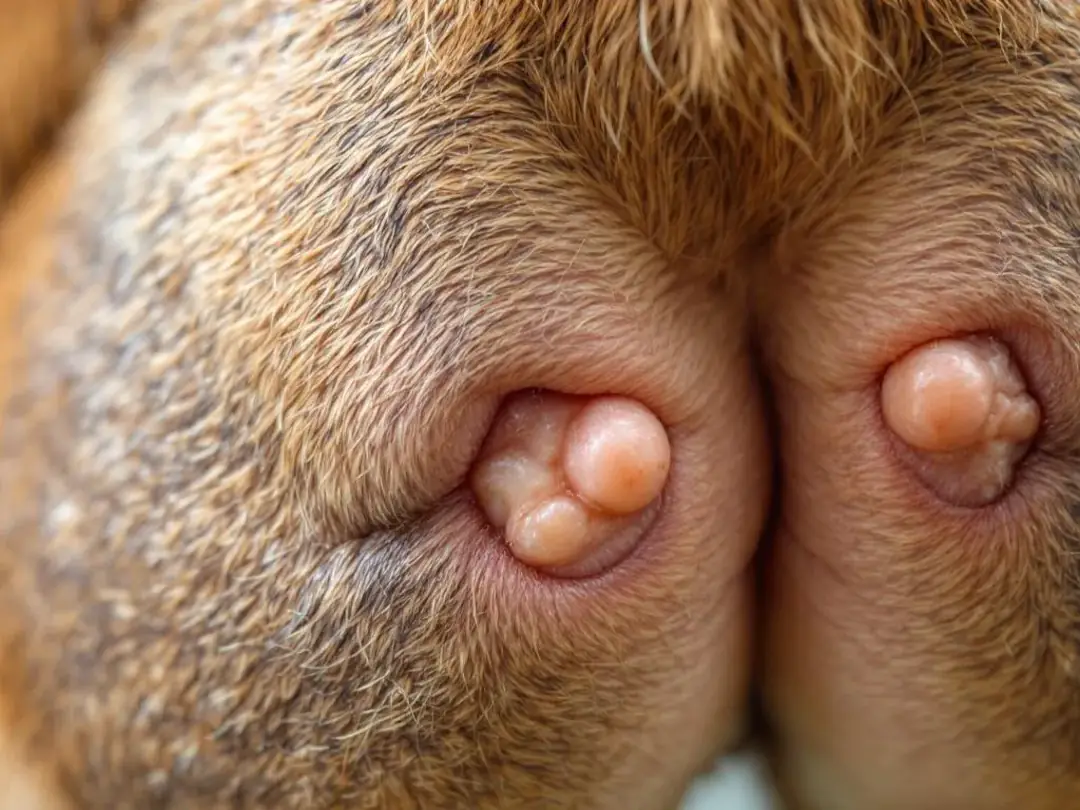

A ruptured anal gland in a dog is a painful condition where an infected or impacted anal sac bursts through the skin near the anus and begins draining.
If you are trying to sort out whether your dog's rear-end discomfort points to a skin issue, infection, or another medical problem, our why is my dog shaking guide is a useful next read because pain and distress can show up in several confusing ways.
Key Takeaways
- A ruptured anal gland is painful and needs veterinary attention.
- Common signs include swelling, drainage, odor, licking, scooting, and pain near the rear end.
- Treatment usually involves cleaning, antibiotics, pain relief, and home wound care.
- Dogs may need a cone to prevent licking during healing.
- Weight control, stool quality, and early attention to anal gland issues can help prevent recurrence.
What a Ruptured Anal Gland Actually Is
Dogs have two anal sacs near the anus that normally empty during bowel movements. When one becomes blocked, impacted, or infected, pressure can build until the gland ruptures through the skin. That creates an open, painful wound that may drain blood, pus, or foul-smelling fluid.
This is not just a messy problem. It is a medical one.
By the time it ruptures, the gland has usually been in trouble for a while.
Common Signs to Watch For
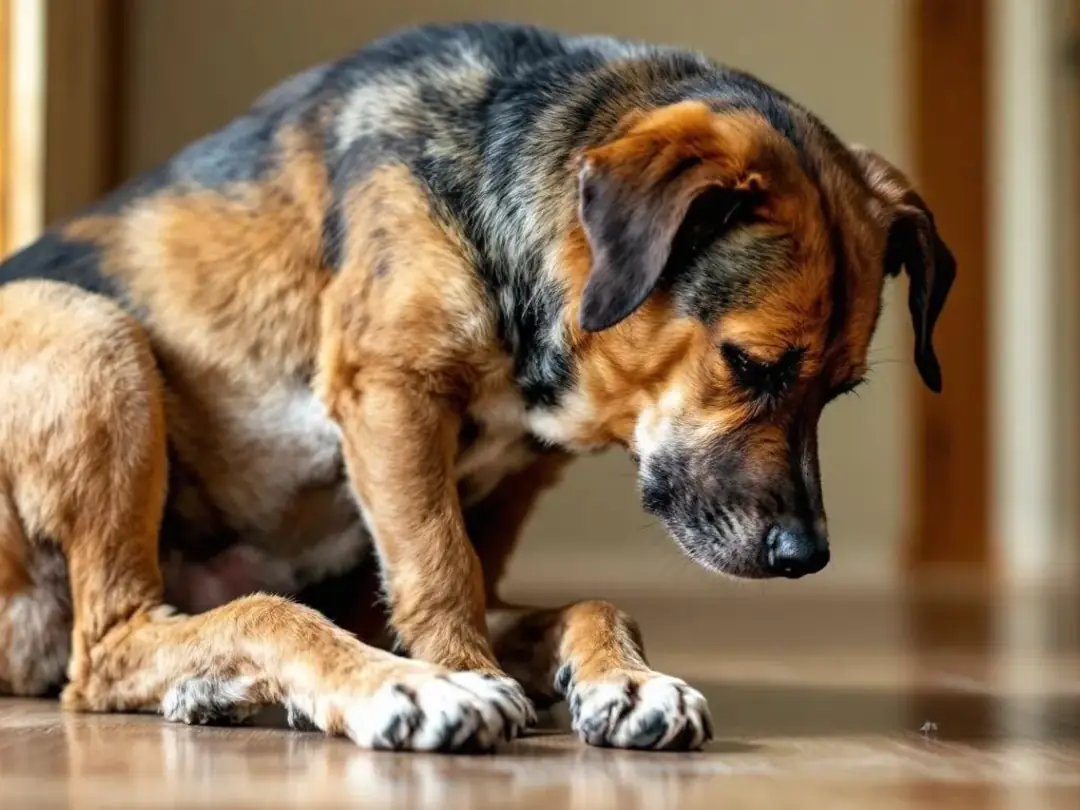
Common signs include scooting, licking the rear end, swelling beside the anus, pain when sitting, reluctance to let you touch the area, a strong fishy or infected odor, and visible drainage or an open sore near the anus. Some dogs also seem restless, uncomfortable, or generally unwell.
Once the gland ruptures, the area often looks worse but the pressure may briefly feel better to the dog.
Relief after rupture does not mean the problem is solved.
Why It Happens
Rupture usually starts with a gland that did not empty properly.
Impaction, infection, chronic inflammation, soft stools, obesity, allergies, and poor natural gland expression can all contribute. Some dogs are simply more prone to anal gland trouble than others, especially small breeds and dogs with recurring digestive or skin issues.
That is why rupture is often the end stage of a problem that started earlier.
The burst is sudden, but the buildup usually was not.
What Veterinary Treatment Usually Involves
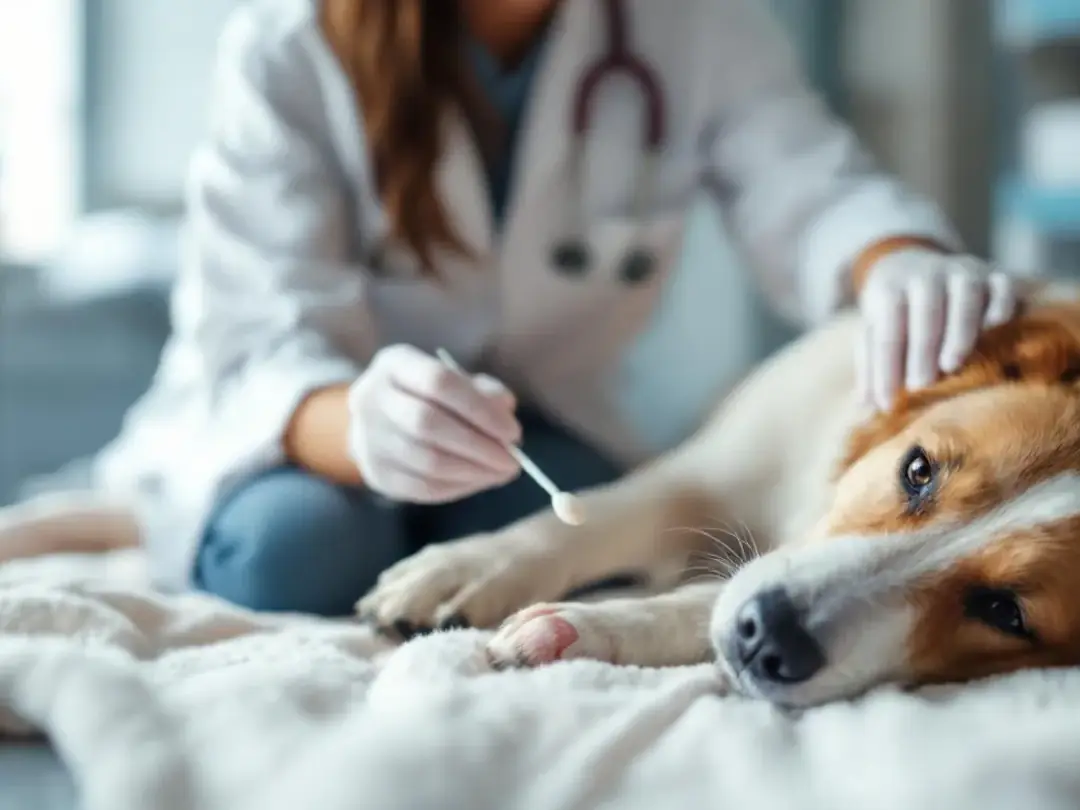
Veterinary treatment often includes examining the area, flushing and cleaning the wound, prescribing antibiotics, and giving pain relief or anti-inflammatory medication. Some dogs may need sedation for proper cleaning if the area is very painful. In more severe or recurring cases, surgery may eventually be discussed.
The goal is to control infection, reduce pain, and help the wound heal cleanly.
This is one of those problems that usually needs more than a quick wipe and watch.
What Home Care Looks Like
Home care matters a lot after the vet visit.
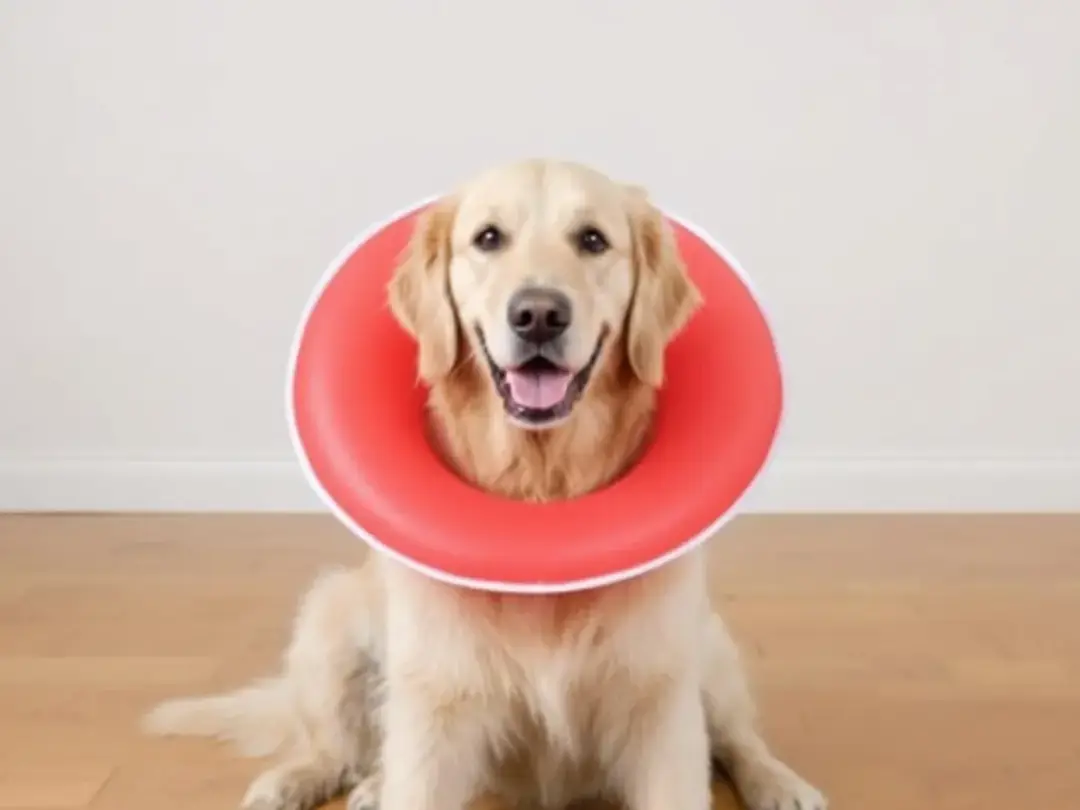
Home care may include giving all medications exactly as prescribed, gently cleaning the area if your veterinarian instructs you to, using a cone to stop licking, and watching for worsening swelling, odor, or discharge. Clean bedding and close monitoring help support healing.
Follow-up visits may also be needed to make sure the wound is closing properly.
Healing is not just about what the vet does once. It is also about what happens after you get home.
How to Help Prevent It from Happening Again
Prevention often focuses on maintaining a healthy weight, improving stool quality, managing allergies or skin disease, and addressing early anal gland problems before they become severe. Some dogs may need regular veterinary monitoring if they have chronic issues.
That is especially true for small dogs and dogs with repeated impactions.
Prevention usually starts with noticing the early signs sooner next time.
Bottom Line
A ruptured anal gland is painful, messy, and not something to manage by guessing.
Most dogs recover well with prompt veterinary care, but waiting too long can make the infection and healing process much worse. If you see swelling, drainage, odor, or obvious pain near the anus, it is time to call the vet.
This is one of those problems where fast action usually makes life easier for everyone.
The sooner it is treated, the less miserable the dog usually is.
FAQ
Common Questions About a Ruptured Anal Gland in Dogs
These quick answers cover common questions about symptoms, treatment, healing, and prevention.
What does a ruptured anal gland look like?
It often looks like a swollen, painful area or open draining wound beside the anus, sometimes with blood or pus.
Is a ruptured anal gland an emergency?
It needs prompt veterinary care because it is painful and usually involves infection.
How is it treated?
Treatment often includes cleaning the wound, antibiotics, pain relief, and home care during healing.
How long does it take to heal?
Many dogs improve over a few weeks, but healing time depends on severity and how quickly treatment started.
Can it happen again?
Yes. Some dogs are prone to recurring anal gland problems, especially if the underlying cause is not addressed.


