
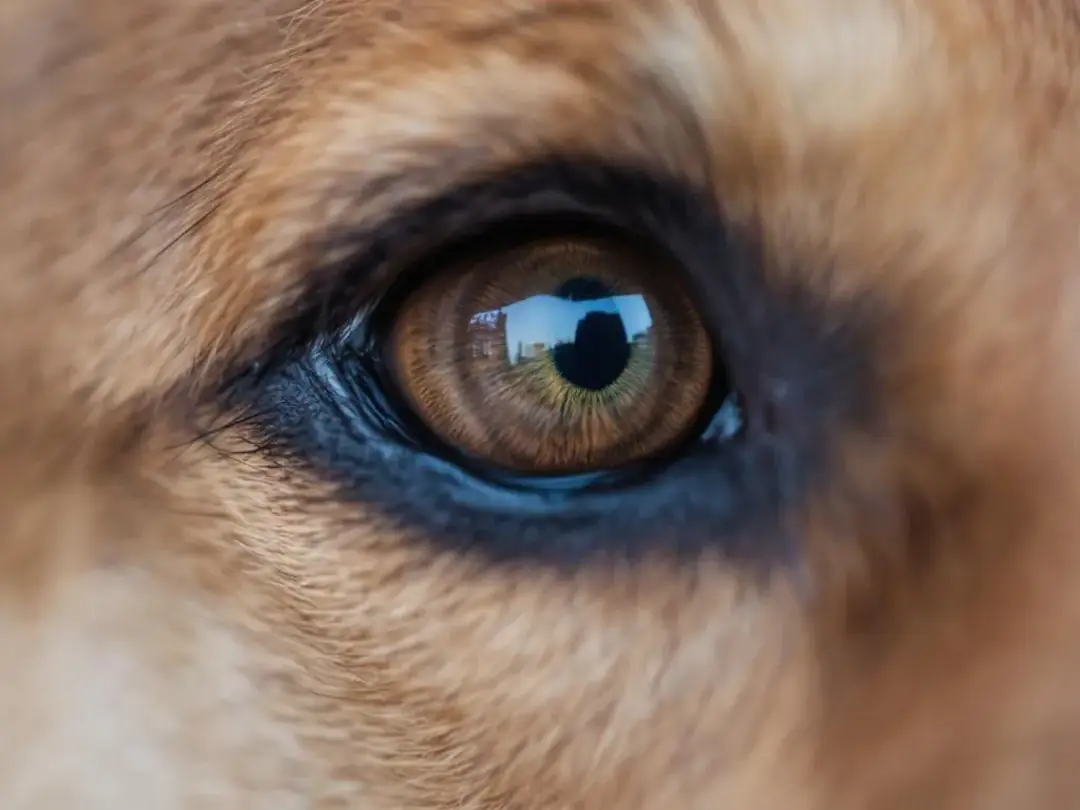

Dogs are not truly seeing the world in black and white. Instead, they see a narrower color range than humans, with blue and yellow standing out most clearly while reds and greens tend to blend into duller tones. If you have ever wondered why some toys seem easier for dogs to find than others, their visual system is a big reason why.
Understanding canine vision can help with everything from toy selection to training and enrichment. It also pairs naturally with broader questions about how dogs process the world, including what colors dogs can see and how visual cues fit into everyday routines.
Key Takeaways
- Dogs are not completely color blind but have dichromatic vision, seeing primarily blue and yellow colors.
- Dog color vision resembles red green color blindness in humans, so reds and greens often appear brownish or gray.
- Dogs see fewer colors than humans, but they are much better at motion detection and low-light vision.
- Blue and yellow toys are often easier for dogs to spot during play and training.
- Dogs make up for limited color vision with strong night vision, wider peripheral vision, and a much more powerful sense of smell.
What Does It Mean for Dogs to Be Color Blind?
The popular notion that dogs are completely color blind is one of the most persistent myths in pet care. When people ask whether dogs are color blind, they often imagine their furry friends seeing the world in shades of gray, like an old black-and-white movie. However, scientific research reveals a more nuanced reality.
Color blindness does not mean seeing only in black and white. Instead, it refers to a reduced ability to distinguish between certain colors. Most dogs experience what is called dichromatic vision, meaning they have only two types of cones, or color receptors, in their eyes compared with the three types found in human eyes.
This condition is remarkably similar to red green color blindness in humans, specifically a form called deuteranopia. People with this condition can still see some colors, but they struggle to separate reds and greens. Dogs can also distinguish some colors, especially blue and yellow, but reds and greens tend to appear as muted browns, grays, or yellowish tones.
The difference comes down to cone cells versus rod cells. Cone cells detect color and work best in bright light, while rod cells detect light levels and motion and function better in dim light. Dogs have fewer cone cells than humans but significantly more rod cells, which helps explain their stronger night vision and motion detection.
The Science Behind Dog Color Vision
Understanding canine vision requires looking at the structure of a dog's eyes at the cellular level. The retina contains two main types of photoreceptors: cones for color detection and rods for light sensitivity. Human vision relies on three types of cones sensitive to blue, green, and red wavelengths, which is why people can see a much broader range of colors.
Dogs possess only two types of cones, making their vision dichromatic. These cone cells respond to wavelengths in the blue-violet and yellow ranges. This biological difference means dogs cannot process the red-green portion of the color spectrum the way humans do.
Scientific research, especially studies by Jay Neitz and colleagues, helped overturn the old belief that dogs see only in black and white. Behavioral testing and electroretinography showed that dogs could distinguish blue and yellow stimuli while struggling with red and green objects.
The evolutionary basis for this makes sense. Dogs evolved from wolves, which often hunted during dawn and dusk when motion detection and low-light vision mattered more than rich color perception. That tradeoff served survival well, and it still shapes how dogs experience the world today.
Dogs have far fewer cones than humans but a much higher density of rod cells. Combined with the tapetum lucidum, the reflective layer behind the retina, this gives dogs a major advantage in dim conditions. If you are also curious about how dogs process other visual experiences, our article on can dogs watch TV explores how screens, motion, and visual stimulation may look from a dog's perspective.
Dog Vision at a Glance
| Vision Feature | Dogs | Humans |
|---|---|---|
| Color range | Mostly blue and yellow | Full red, green, blue range |
| Red and green objects | Often appear brownish, gray, or muted | Usually easy to distinguish |
| Motion detection | Very strong | Good, but less specialized |
| Low-light vision | Excellent | More limited |
| Best toy colors | Blue and yellow | Varies by preference |
This is one reason many trainers and owners prefer blue or yellow toys, markers, and training tools. Those colors are simply easier for dogs to pick out during play and learning.

What Colors Can Dogs Actually See?
The question of what colors dogs can see has a surprisingly specific answer. Dogs can clearly distinguish blue and yellow hues, along with some combinations and intensities of those colors.
Blue appears vibrant to dogs, ranging from deep navy to bright sky blue. Yellow also registers clearly, from pale cream to bright sunshine yellow. These are the colors that tend to stand out best in a dog's visual field.
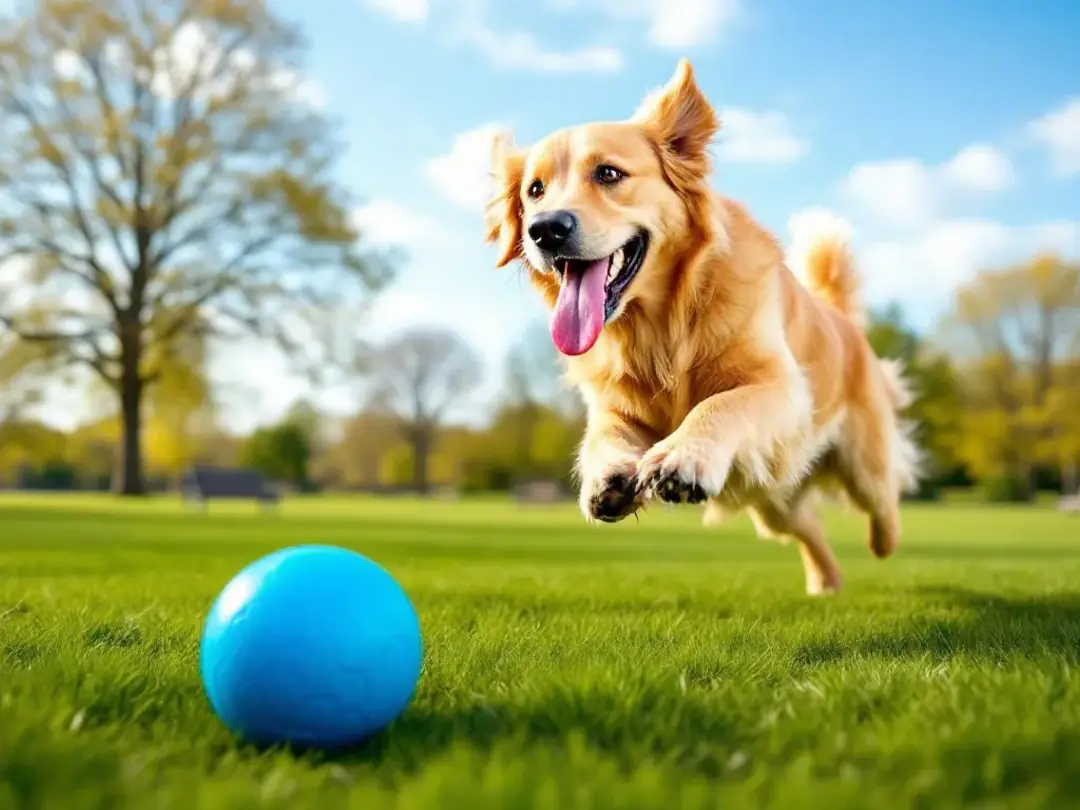
However, the colors that appear red or green to humans present a very different picture to canine vision. A red ball may appear dark brown, gray, or even black to dogs. Green grass often looks yellowish or grayish rather than the vibrant green humans perceive. That is why a red toy on green grass can be much harder for a dog to spot than a blue toy in the same setting.
Pink objects often appear as light gray or white to dogs, while orange items may look yellow. Purple and violet can appear blue because they contain wavelengths dogs can detect. Their world is not colorless, but it is more limited and muted than ours.
Understanding these limits helps explain why some dogs seem to lose track of certain toys outdoors. It is not always poor focus or poor training. Sometimes the object simply does not stand out well in the environment.
How Dog Vision Compares to Human Vision
When comparing dog vision to human vision, the differences go beyond color. Visual acuity, or sharpness, is significantly lower in dogs. While humans with perfect vision see at 20/20, many dogs see closer to 20/75, meaning distant objects appear blurrier to them.
Dogs make up for that lower sharpness with stronger abilities in other areas. Their peripheral vision is wider than ours, which helps them detect movement from more directions. Motion detection is one of the biggest strengths of canine vision, and dogs can often notice movement at distances where a stationary object would not stand out at all.
Night vision is another major advantage. More rods, larger pupils, and the tapetum lucidum reflective layer help dogs see in low light far better than humans can. This is one reason dogs often seem more comfortable moving around at dawn, dusk, or in dim rooms.
Depth perception can vary by breed because eye placement differs. Dogs with more forward-facing eyes may have better binocular vision, while dogs with wider-set eyes may trade some depth perception for a broader field of view.
Debunking the Black and White Myth
The idea that dogs see only in black and white has been repeated for decades, but modern research has clearly shown that this is not accurate.
The myth gained traction long before researchers had good tools for testing animal vision. Early assumptions about non-human sight were often based on limited evidence, and dogs were lumped into the black-and-white category without strong proof.
Later studies using behavioral testing and retinal analysis showed that dogs do process color, just not in the same broad way humans do. They are not monochromatic. They are dichromatic.
That distinction matters because it changes how owners think about toys, training tools, and even the way dogs respond to their environment. A dog may not see the same rich color palette you do, but that does not mean the world looks colorless to them.
Factors Affecting Dog Vision
A dog's vision is shaped by more than just species-level biology. Breed, age, and overall eye health can all influence how clearly a dog sees and how well they navigate their environment.
Some breeds, especially brachycephalic dogs with prominent eyes, may be more prone to eye issues that affect clarity and comfort. As dogs age, cataracts and other age-related changes can reduce visual sharpness and make it harder to process detail.
Progressive retinal atrophy and other eye diseases can also affect how a dog sees over time. That is why changes in confidence, navigation, or response to visual cues should not be ignored. If a dog suddenly seems hesitant, bumps into objects, or struggles in dim light, a veterinary exam is a smart next step.
Dog Vision and Environment
A dog's environment plays a major role in how useful their vision is from moment to moment. Dogs are naturally equipped to do well in low light and to notice movement quickly, which helps them navigate outdoor spaces and changing surroundings.
Indoors, dogs may rely more heavily on smell and hearing, but vision still matters. The colors present in the environment can affect how easily a dog notices toys, bowls, or training tools. Blue and yellow objects are often easier for dogs to pick out, especially when there is good contrast with the background.
Lighting matters too. Dogs often do well in dawn and dusk conditions, and they may respond differently to objects depending on whether the room is bright, dim, or full of visual clutter. This is one reason clear routines and familiar layouts can help dogs feel more confident at home. If you are thinking about how dogs process daily patterns more broadly, our article on do dogs have a sense of time explores how routine and expectation shape their day-to-day experience.
Practical Implications for Dog Owners
Understanding dog color vision can improve everyday choices in a very practical way. The most obvious example is toy selection. Blue and yellow toys are often easier for dogs to see, especially outdoors or in busy visual environments.
That matters during fetch, training, and enrichment. A toy that stands out clearly is easier for a dog to track, retrieve, and stay engaged with. By contrast, red or green toys may blend into grass, leaves, or other natural backgrounds.
Training equipment can benefit from the same logic. Markers, cones, and visual targets in blue or yellow may be easier for dogs to notice. This does not replace good training technique, but it can make visual cues more effective.
Owners can also use this knowledge when setting up dog-friendly spaces. Clear contrast, familiar object placement, and reduced clutter can all help dogs move through the home more confidently.
Breed Variations in Canine Vision
While all dogs share the same basic dichromatic color system, breed differences can still affect how vision functions in practice. Eye placement, skull shape, and historical working roles all influence visual strengths and weaknesses.
Sight hounds often have strong distance vision and motion tracking because they were bred to spot and chase moving prey. Brachycephalic breeds may have a wider field of view but less precise depth perception. Long-nosed working breeds may be especially good at judging distance and movement in front of them.
These differences do not change the basic blue-yellow color pattern, but they do affect how dogs use vision in real life. That is why some dogs seem especially tuned in to movement, while others rely more heavily on smell, proximity, or routine.
FAQ
Common Questions About Dog Color Vision
These quick answers cover a few of the most common questions dog owners ask about color vision, television, aging eyes, and how dogs rely on sight compared to their other senses.
Can dogs see TV screens and electronic displays clearly?
Dogs can see television screens, but their experience differs from humans. Modern TVs are easier for dogs to process, though colors appear more muted and detail is less sharp.
Do dogs see better at dawn and dusk compared to midday?
Yes. Dogs have superior vision during twilight hours because their eyes are optimized for low light conditions, which helps them detect motion and navigate more effectively at dawn and dusk.
How does age affect a dog's color vision and overall eyesight?
Puppies develop full color perception by about 8 to 10 weeks, while senior dogs may experience reduced visual clarity from age-related changes such as cataracts or retinal decline.
Do dogs rely more on smell or vision when navigating their environment?
Dogs rely primarily on smell, which is far more sensitive than human scent detection. Vision still matters, especially for motion and obstacle awareness, but smell is usually their dominant sense.


