
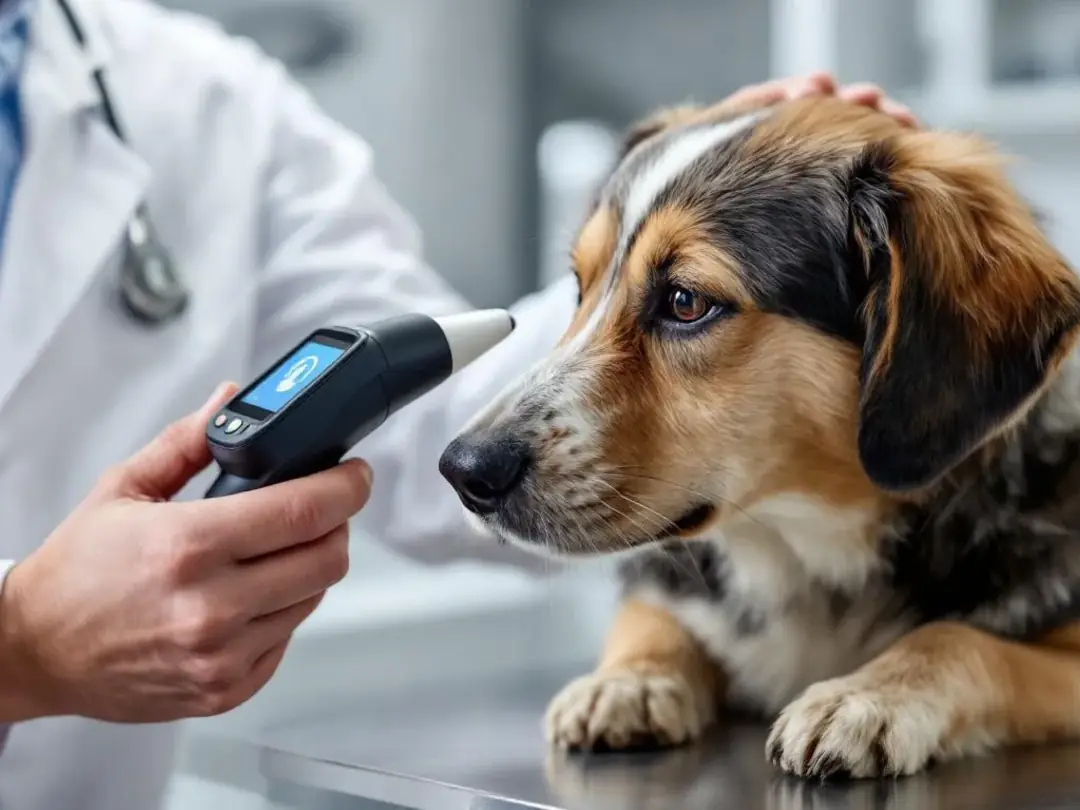

Vestibular disease in dogs is a balance disorder that can cause sudden head tilt, loss of coordination, falling, and abnormal eye movements that often look frightening even when the condition is not always life-threatening.
If you are trying to understand whether your dog's symptoms point to a balance problem, neurological issue, or another urgent concern, our why is my dog shaking guide is a useful next read because sudden physical changes often overlap in confusing ways.
Key Takeaways
- Vestibular disease affects the balance system and often appears suddenly.
- Common signs include head tilt, falling, circling, nystagmus, and nausea.
- Many cases in older dogs are idiopathic, meaning no exact cause is found.
- Veterinary evaluation is important to rule out more serious causes.
- Many dogs improve significantly within days to weeks with supportive care.
What Vestibular Disease in Dogs Actually Is
Vestibular disease affects the system that helps a dog maintain balance, orientation, and coordinated movement. That system involves parts of the inner ear and the brain working together to tell the body where it is in space.
When that system is disrupted, the dog may suddenly look dizzy, off balance, or unable to walk normally.
The body may still be strong, but the balance signals are no longer making sense.
Common Signs and Symptoms
Common signs include a sudden head tilt, stumbling, falling, leaning to one side, circling, rapid eye movements called nystagmus, nausea, vomiting, and general disorientation. Some dogs also seem frightened or confused because the world suddenly feels unstable.
The symptoms often come on fast, which is one reason the condition can be so alarming to watch.
It can look dramatic even when the dog is not in severe pain.

Why It Happens
There is not always one clear answer.
Many cases are called idiopathic vestibular disease, which means no exact cause is found. This is especially common in older dogs and is sometimes called old dog vestibular syndrome. Other cases may be linked to ear infections, trauma, tumors, inflammation, toxic reactions, or central nervous system problems.
That is why the same outward symptoms can come from very different underlying causes.
The balance problem may be obvious, but the reason behind it may not be.
Why Veterinary Diagnosis Matters
Because vestibular disease can look similar to stroke, brain disease, severe ear infection, or other neurological emergencies, veterinary evaluation matters right away. A veterinarian may examine the ears, check neurological function, review medical history, and recommend blood work or imaging depending on the case.
The goal is not just to name the syndrome but to rule out more dangerous causes.
Balance symptoms are a warning sign, not a final diagnosis.

Treatment and Supportive Care
Treatment depends on the cause, but support is often a big part of it.
Dogs may need anti-nausea medication, fluids, help with eating and drinking, and a safe place to rest while the worst symptoms pass. If an ear infection or another underlying cause is found, that problem also needs specific treatment.
Supportive care at home often includes soft bedding, blocked stairs, help standing, and easy access to water and food.
Sometimes the best treatment is helping the dog stay safe while the body recalibrates.
Recovery and Prognosis
Many dogs begin improving within a few days, and a lot of idiopathic cases recover well within two to three weeks. Some dogs may keep a mild head tilt even after the major symptoms resolve, but they can still have a good quality of life.
The first day or two often looks the worst, which can be emotionally hard for owners.
Fast onset does not always mean poor outcome.

When It Is More Urgent
Some cases need emergency attention.
Seek urgent veterinary care if your dog cannot stand, keeps vomiting, seems severely distressed, becomes less responsive, develops new neurological signs, or gets worse instead of better. Those details can point to something more serious than a routine idiopathic episode.
It is always better to overreact early than underreact late with sudden neurological symptoms.
If the dog seems dramatically off, treat it like it matters.
FAQ
Common Questions About Vestibular Disease in Dogs
These quick answers cover common questions about symptoms, causes, recovery, and when to seek urgent care.
What does vestibular disease look like in dogs?
It often looks like sudden head tilt, stumbling, falling, circling, rapid eye movements, and disorientation.
Is vestibular disease painful?
It is usually not considered painful by itself, but it can be very disorienting and upsetting for the dog.
How long does recovery take?
Many dogs improve within a few days and recover substantially within two to three weeks, though some keep a mild head tilt.
Is it the same as a stroke?
No, but it can look similar, which is why veterinary evaluation is important.
When should I go to the vet right away?
Go right away if your dog cannot stand, keeps vomiting, becomes less responsive, or seems to be getting worse.


