
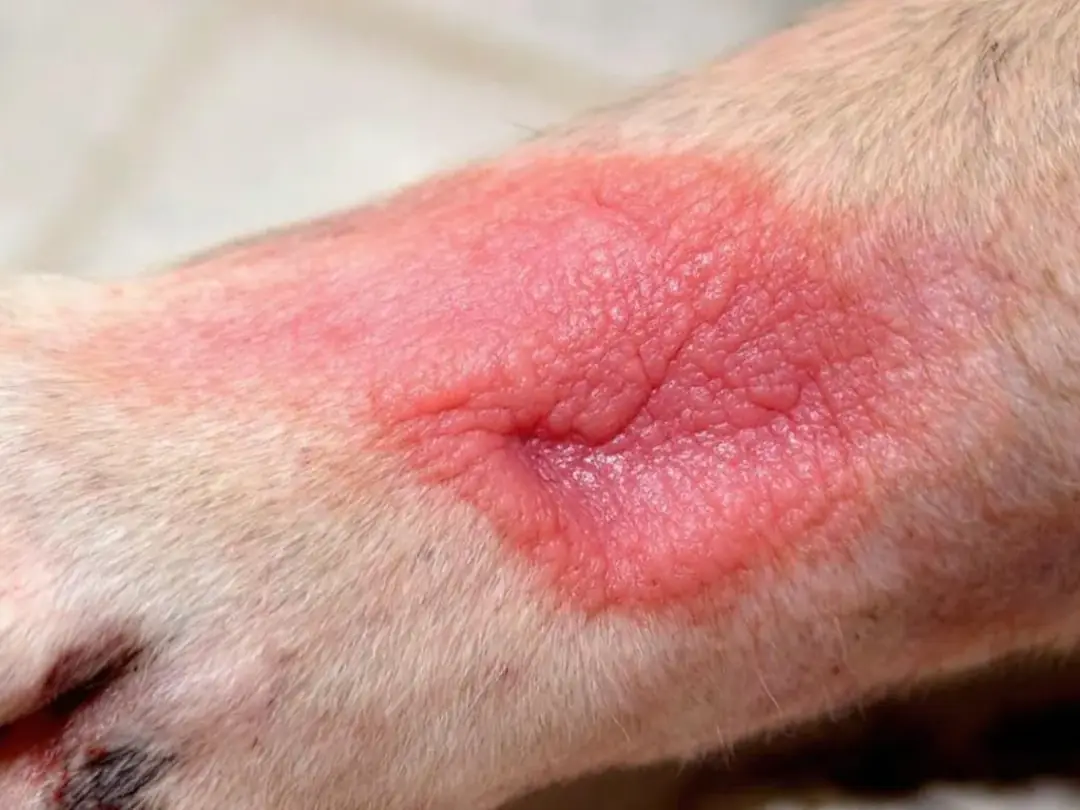

A licking granuloma is a chronic skin lesion caused by repeated licking, usually on a dog's leg, and it often becomes a cycle of irritation, inflammation, and more licking.
If you are trying to sort out whether your dog's skin problem is behavioral, allergic, or infection related, our yeast infection on dog guide is a useful next read because skin issues can overlap in confusing ways.
Key Takeaways
- A licking granuloma is usually caused by repeated licking of the same area.
- It often appears as a thickened, hairless, irritated lesion on a leg.
- Underlying causes can include allergies, pain, infection, boredom, anxiety, or compulsive behavior.
- Treatment usually requires both stopping the licking and addressing the root cause.
- These lesions can take a long time to improve and often need veterinary care.
What a Licking Granuloma Is
A licking granuloma, also called acral lick dermatitis, is a skin lesion that develops when a dog keeps licking the same spot over and over. The repeated trauma damages the skin, causes inflammation, and can lead to infection and thickened tissue.
Once the cycle starts, it often keeps feeding itself.
The dog licks because it is irritated, and the irritation grows because the dog keeps licking.
What It Usually Looks Like
These lesions often show up on the lower legs and may look red, hairless, thickened, moist, or ulcerated. Over time, the area can become darker, firmer, and more obviously chronic. Some dogs also develop secondary infection, discharge, or odor.
That is one reason early attention matters.
A small irritated spot can become a much bigger problem if the licking continues.
Why Dogs Develop Them
Licking granulomas can start for many reasons, including allergies, skin infection, mites, joint pain, arthritis, nerve irritation, boredom, stress, anxiety, or compulsive behavior. Sometimes the original cause is physical, and the behavior becomes habitual even after the first trigger fades.
That is what makes these cases tricky.
You are often treating both a skin problem and a behavior pattern at the same time.
Why Veterinary Diagnosis Matters
A licking granuloma is not something to diagnose by guesswork.
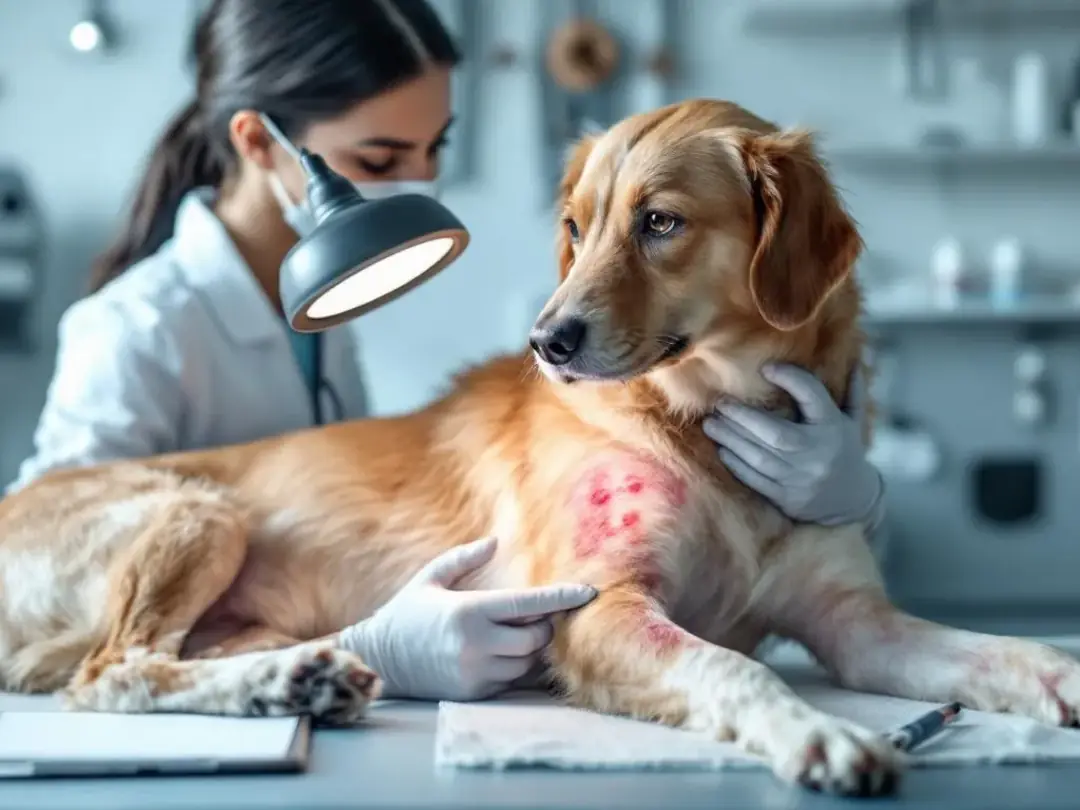
Veterinarians may use skin cytology, culture, skin scraping, biopsy, allergy workups, or imaging to look for the underlying cause. The lesion itself is only part of the problem. The real question is why the dog started and kept licking in the first place.
That answer shapes the treatment plan.
If you only treat the surface, the cycle often comes back.
What Treatment Usually Involves
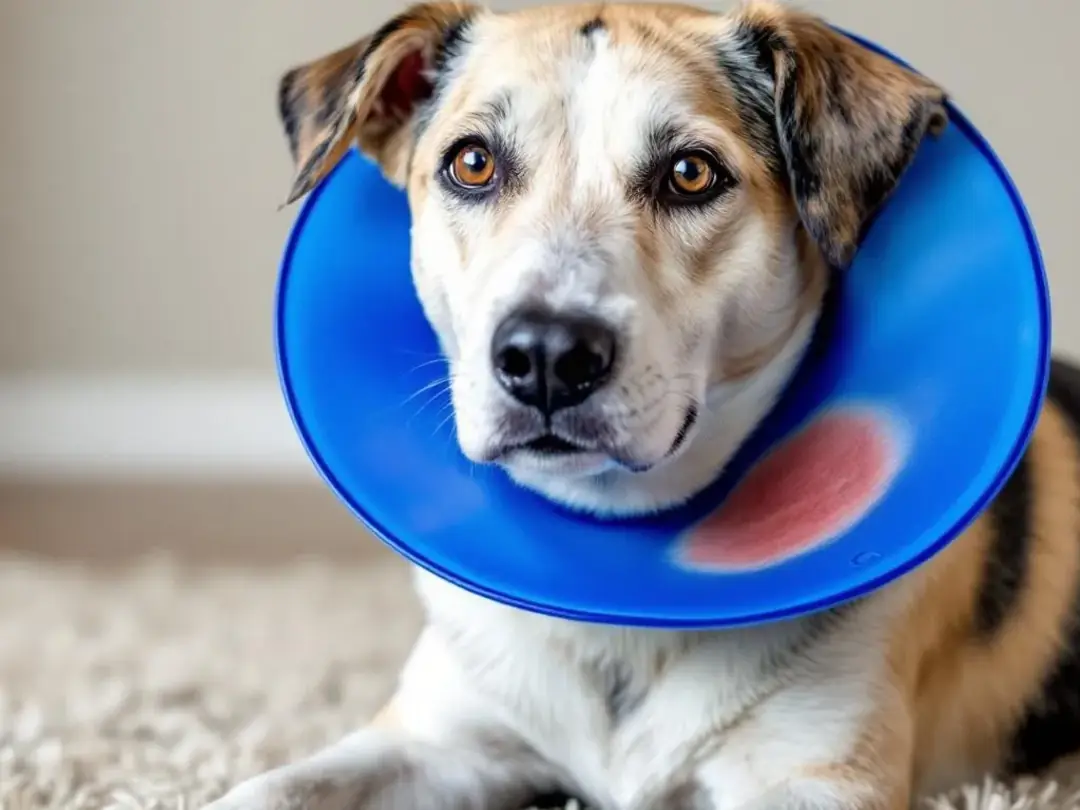
Treatment often includes preventing access to the lesion with an e-collar or other barrier, treating secondary infection, reducing inflammation, and addressing the root cause such as allergies, pain, or anxiety. Some dogs also need behavior support, medication, or environmental enrichment to reduce the urge to lick.
That is why treatment is often multi-layered.
There is usually no single magic fix for a self-reinforcing problem.
Why These Cases Can Take Time
Licking granulomas are often slow to resolve.
These lesions can take weeks or months to improve because the skin is chronically damaged and the licking behavior may already be deeply established. Even when the lesion starts healing, dogs may try to return to the same spot if the underlying trigger is still there.
That is why consistency matters so much.
Healing the skin is only part of healing the problem.
Bottom Line
A licking granuloma is more than a dog just "messing with a spot." It is usually a chronic cycle of irritation and self-trauma that needs real veterinary attention. The sooner the cycle is interrupted and the root cause is addressed, the better the chances of improvement.
That is what makes early action so important.
With these lesions, waiting often gives the habit time to harden.
FAQ
Common Questions About Licking Granuloma
These quick answers cover common questions about what a licking granuloma is, why it happens, and how it is usually treated.
What is a licking granuloma?
It is a chronic skin lesion caused by repeated licking of the same area.
Why do dogs get licking granulomas?
Common causes include allergies, pain, infection, boredom, anxiety, and compulsive behavior.
Can a licking granuloma heal on its own?
It often does not heal well without intervention because the dog keeps reopening and irritating the area.
How is it treated?
Treatment usually includes stopping the licking, treating infection or inflammation, and finding the underlying cause.
How long does it take to improve?
It can take weeks or months, especially if the behavior has become chronic.


