
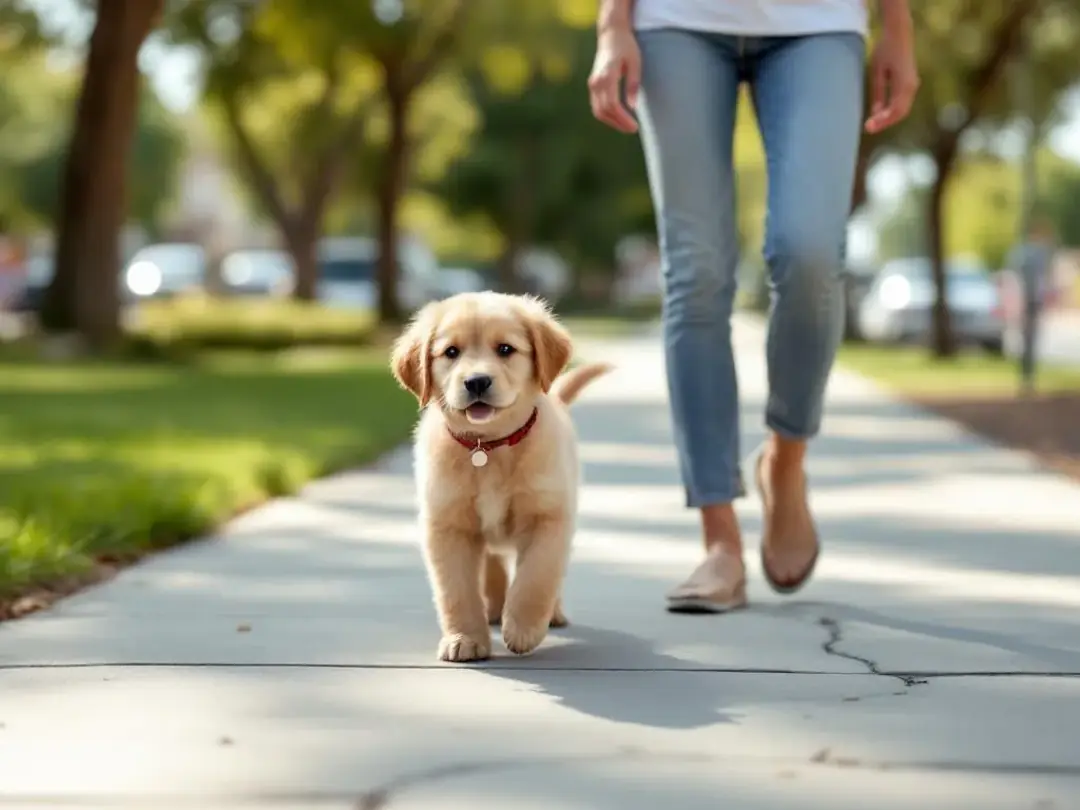

Leash training a puppy means teaching your puppy to feel comfortable wearing walking equipment, follow your guidance, and move with you calmly instead of pulling, freezing, or fighting the leash.
If you are building puppy routines from the ground up, our new puppy daytime schedule guide is a useful next read because leash training works best when it fits into a predictable daily routine.
Key Takeaways
- Leash training usually starts with comfort, not with perfect walking.
- Harnesses are often a better starting choice than collars for many puppies.
- Short, positive sessions work better than long frustrating ones.
- Indoor practice often makes outdoor success easier.
- Pulling, biting the leash, and distraction are common and trainable problems.
Why Leash Training Matters Early
Leash training is not just about walks. It teaches your puppy how to move with you, pay attention in distracting places, and handle the outside world more calmly. It also helps prevent pulling habits from becoming stronger as the puppy grows.
That is why early work matters even if the puppy is still tiny.
A small pulling puppy becomes a much bigger project later.
Start with the Equipment, Not the Walk
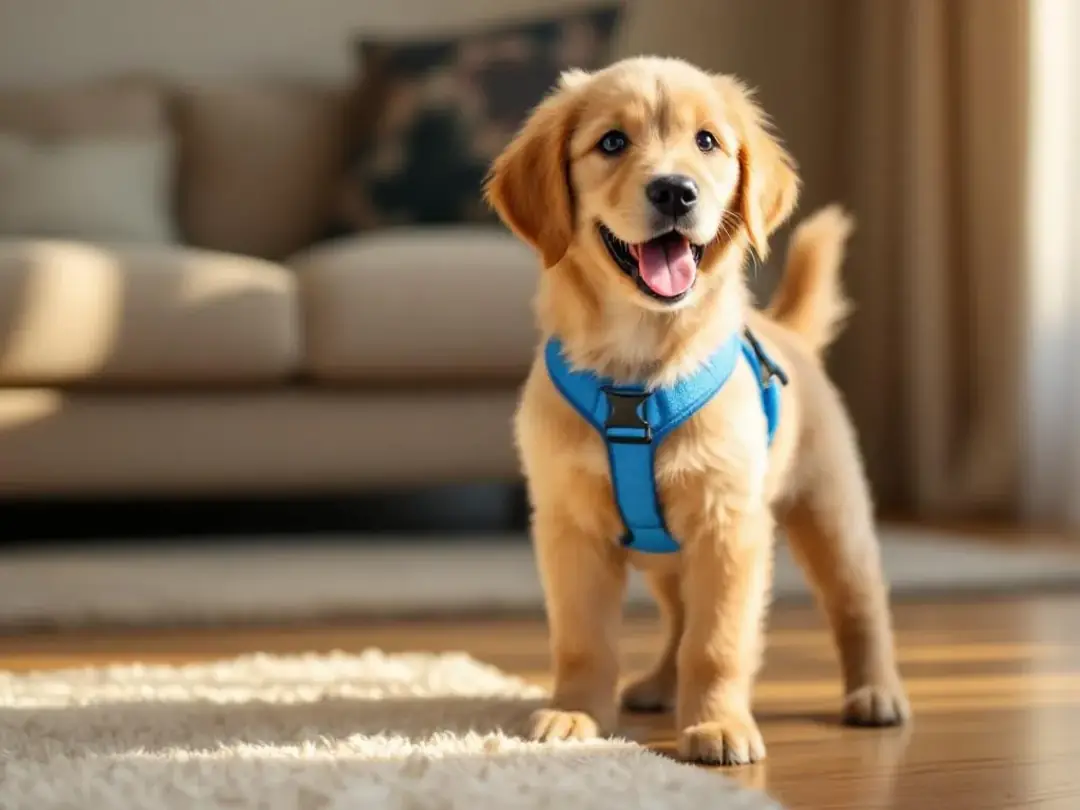
Many puppies need time to get used to wearing a harness or collar before they are ready to walk normally. Let the puppy wear the gear for short, positive sessions indoors, pair it with treats and play, and make the equipment feel ordinary before expecting real leash skills.
This step is easy to rush and worth not rushing.
Comfort comes before cooperation.
Practice Indoors Before the Real World
Indoor practice gives you a much easier starting point.
Walking a few steps in the house, following a treat, turning with you, and learning that leash pressure does not mean panic are all useful early lessons. Indoors, there are fewer smells, sounds, and moving distractions competing for your puppy's brain.
That makes success easier to create.
It is easier to teach the skill before the world gets loud.
How to Handle Pulling
One common method is to stop moving when the puppy pulls and reward movement when the leash becomes loose again. The idea is simple: pulling does not make the walk continue, but staying connected to you does. Some owners also use direction changes to keep the puppy engaged.
What matters most is consistency.
If pulling sometimes works, the puppy will keep trying it.
Common Problems Are Normal
Most puppies do not start out looking polished on a leash.
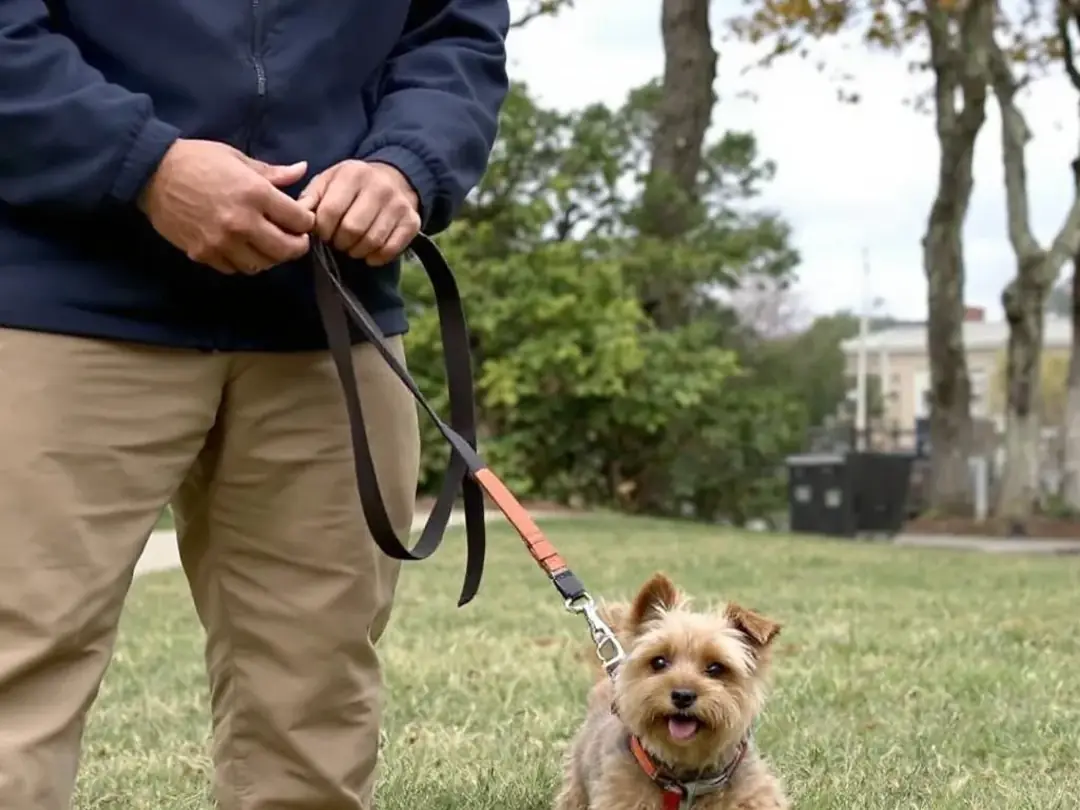
Freezing, biting the leash, zooming, barking, lunging at distractions, and forgetting everything outside are all common. These are not signs that the puppy is impossible. They are signs that the puppy is young, overstimulated, or still learning.
That is why short sessions and realistic expectations matter so much.
Messy first attempts are part of the process, not proof the process is failing.
Keep Sessions Short and Positive
Puppies learn best in short sessions with clear rewards. A few good minutes can be more productive than a long walk that ends in frustration. It is often better to stop while the puppy is still successful than to keep going until everyone is annoyed.
That is especially true in the early stages.
Good leash training is built in small wins.

Bottom Line
Leash training a puppy is less about control and more about teaching a partnership.
When you start with comfort, use clear rewards, and keep expectations realistic, most puppies can learn to walk much more calmly over time. The goal is not a perfect heel on day one. The goal is a puppy that understands how to move with you and trust the process.
That is what turns walks into a skill instead of a struggle.
Good leash manners are usually built, not forced.
FAQ
Common Questions About Leash Training a Puppy
These quick answers cover common questions about when to start, what equipment to use, and how to handle common leash problems.
When should I start leash training a puppy?
You can start introducing the equipment very early, but structured outdoor training usually builds gradually as the puppy matures.
Is a harness better than a collar?
For many puppies, yes. A harness often gives better control and reduces strain on the neck.
What if my puppy bites the leash?
That is common. Redirect, keep sessions short, and avoid turning it into a game of tug.
How do I stop my puppy from pulling?
Many owners stop moving when the leash gets tight and reward the puppy when the leash becomes loose again.
How long does leash training take?
It varies. Some puppies improve quickly, while others need weeks or months of steady practice.


