

Key Takeaways
-
Young puppies usually need more frequent meals than adult dogs.
-
Small meals support energy, training, and digestion during growth.
-
The food label and your veterinarian should guide total daily amount.
-
Meal timing helps potty training because puppies often need to go after eating.
-
Do not switch foods or change meal count too suddenly.
Meal frequency changes as puppies grow
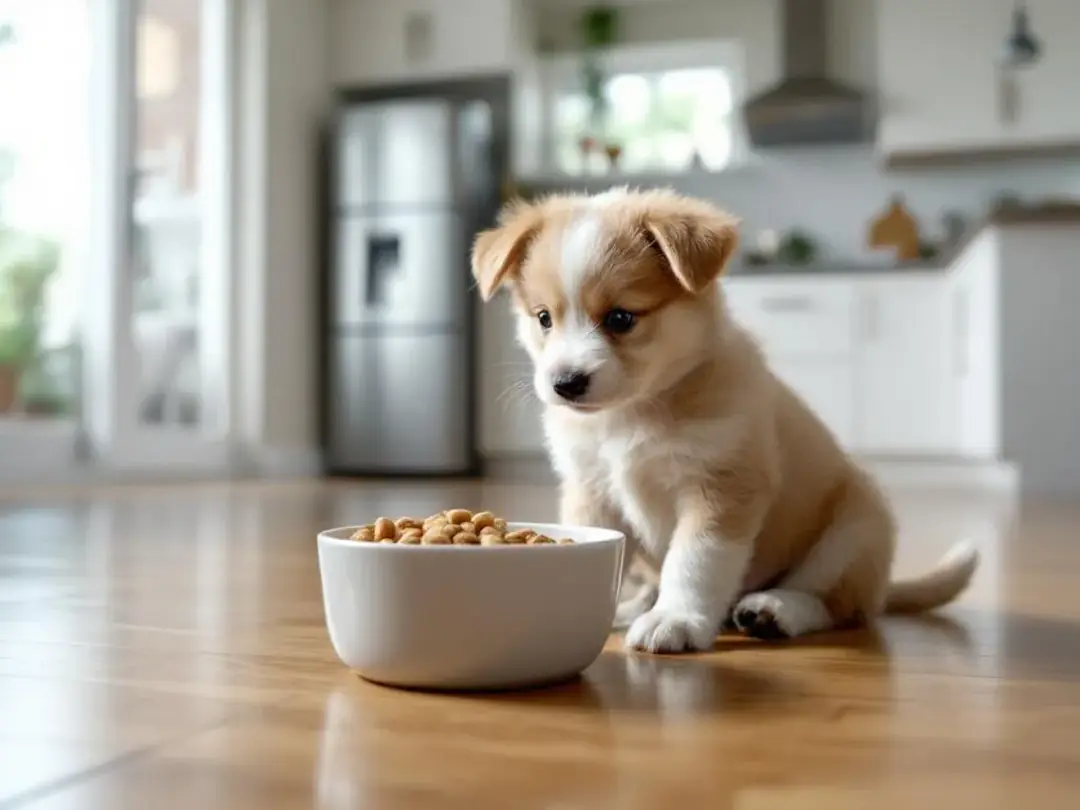
Many young puppies do best with three to four meals per day, then gradually move toward fewer meals as they mature. The exact timing depends on age, size, breed, appetite, health, and the food being used.
For the full daily rhythm around meals, naps, potty trips, and bedtime, use our 8-week puppy schedule.
Total amount matters as much as meal count
Splitting food into three meals does not mean tripling the food. Use the puppy-food label and your veterinarian’s guidance to set the daily total, then divide it across meals. Puppies need growth-stage nutrition, but overfeeding can create problems too.
Meal timing should work with potty training. Many puppies need to eliminate shortly after eating, so predictable meals make bathroom timing easier than constant free feeding.
| Age stage | Common meal rhythm | Planning note |
|---|---|---|
| 8–12 weeks | Often 3–4 meals daily | Pair meals with potty trips |
| 3–6 months | Often 3 meals daily | Adjust as growth and appetite change |
| 6–12 months | Often 2–3 meals daily | Depends on size and vet guidance |
| Adult transition | Often 2 meals daily | Switch food gradually when appropriate |
Training treats count too
Puppies may earn many rewards during training. Those rewards should come from the daily plan, not sit on top of it forever. Our puppy training treats guide explains how to keep rewards useful without overloading the stomach.
If your puppy skips meals, vomits, has diarrhea, loses weight, or seems weak, call your veterinarian. Puppies can decline faster than adult dogs when hydration or calories drop.
Connect meals to potty training and sleep
Meals shape the entire puppy day. A consistent breakfast, lunch, and dinner rhythm makes potty timing easier, helps nap planning, and keeps evening hunger from turning into chaos. Our new puppy daytime schedule can help families build the full loop.
If your puppy eats too fast, use a slow bowl, scatter feeding, or measured training rewards rather than adding extra food. For food amount details, use our puppy food feeding chart and keep total intake consistent.
Watch the puppy after each meal. Soft stool, vomiting, refusal, frantic hunger, or poor weight gain are all reasons to slow down and ask your veterinarian whether the food, amount, or timing needs to change.
What to track during growth
Track the food name, meal amount, meal times, stool quality, appetite, and weight checks during the first months. Puppies change quickly, and a written record helps you know whether a feeding issue is new or ongoing. If you change food, meal count, or treats, change one thing at a time so you can tell what actually affected digestion or behavior.
Final thoughts
A puppy feeding schedule should support growth and routine. Start with age-appropriate puppy food, divide the daily amount into manageable meals, and adjust the plan with your veterinarian as the puppy grows.
Sources Used
AAHA: AAHA Nutrition and Weight Management Guidelines — Supports body-condition, muscle-condition, diet-history, and individualized feeding decisions.
WSAVA: WSAVA Global Nutrition Guidelines — Supports individualized nutrition plans and routine nutritional screening.
Common Questions
FAQ
Use the answers below to apply How Many Times Should a Puppy Eat a Day without turning one detail into the whole decision.
Should puppies eat three or four times a day?
Many young puppies do well with three to four meals, but size, age, and health can change the plan.
When can a puppy switch to two meals?
Many puppies move toward two meals later in puppyhood, but timing varies by breed size and veterinarian guidance.
Is free feeding good for puppies?
Free feeding can make potty training and portion control harder for many families.
What if my puppy is not hungry?
One missed meal may happen, but repeated refusal, weakness, vomiting, or diarrhea needs veterinary attention.
Can I use kibble as training treats?
Yes. Using part of the measured meal for training is a simple way to reward without adding extra calories.
Trusted Records & Registrations
ABCs Puppy Zs
Official parent records, litter registration details, microchip protection, health documentation, and DNA testing are shown clearly for every puppy family.


