
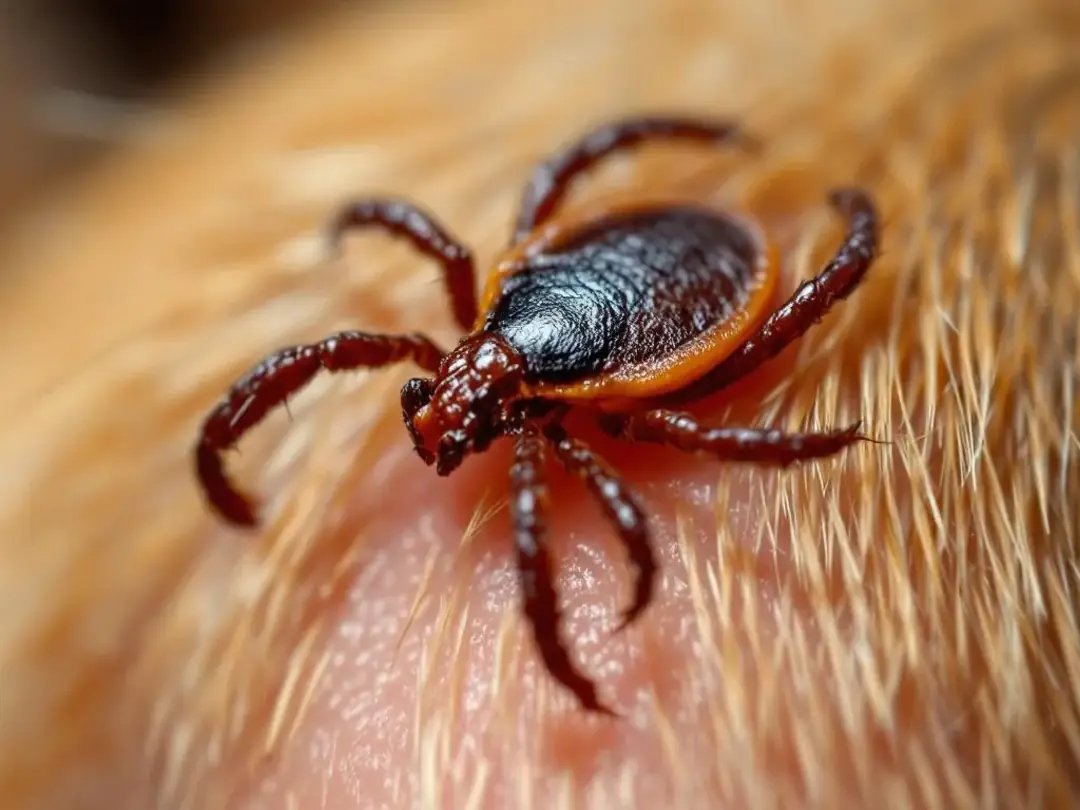

Embedded ticks on dogs can look like small bumps or skin tags at first, but the longer they stay attached, the more they feed and the greater the health risk becomes.
If you're dealing with ticks or unusual symptoms after outdoor activity, our ehrlichiosis in dogs guide is a useful next read because prolonged tick attachment can increase the risk of serious tick-borne disease.
Key Takeaways
- Embedded ticks can resemble small bumps, scabs, or skin tags.
- Ticks often hide in warm, protected areas like ears, toes, groin, and under collars.
- The longer a tick stays attached, the greater the disease risk.
- Safe removal with tweezers or a tick tool helps reduce complications.
- Daily checks and year-round prevention are the best long-term protection.
What an Embedded Tick Looks Like
A newly attached tick may look like a tiny dark speck, but as it feeds it becomes larger, rounder, and more obvious. Fully embedded or engorged ticks can look like small gray, tan, or dark bumps attached to the skin.
That is why owners often mistake them for skin tags, scabs, or small growths at first.
The difference is that a tick changes fast, and it does not belong there.
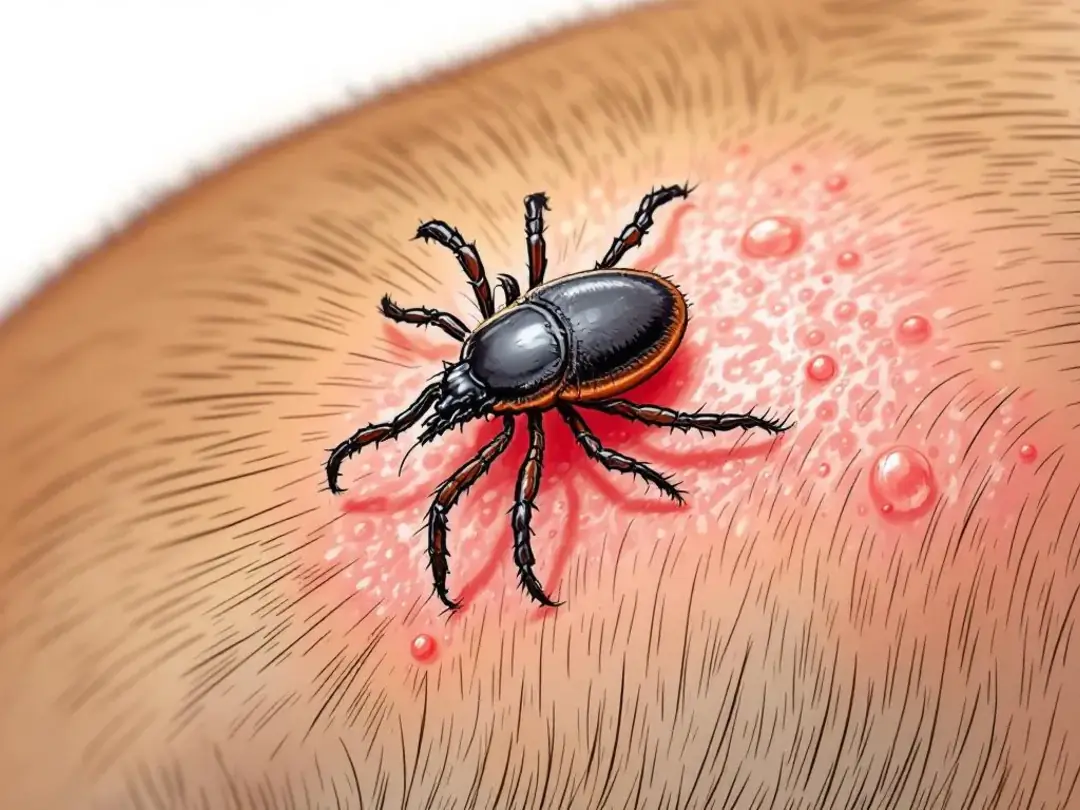
How Ticks Become Fully Embedded
Ticks do not just land and stay on the surface.
Once a tick reaches the skin, it uses its mouthparts to anchor itself and begin feeding. As it takes in blood, the body swells over hours to days. The longer it remains attached, the more engorged it becomes and the more likely it is to transmit disease.
This is why early detection matters so much. A small tick today can become a much bigger problem very quickly.
With ticks, time is part of the danger.
Where Ticks Commonly Hide on Dogs
Ticks often hide behind the ears, under the collar, between the toes, in the armpits, around the groin, on the belly, and near the base of the tail. These areas are warm, protected, and easy to miss during a quick glance.
That is why a proper tick check should be done with your hands as well as your eyes, especially after time in grass, brush, or wooded areas.
If you only look quickly, the tick often wins.

Health Risks of Fully Embedded Ticks
The bite itself is only part of the concern.
Embedded ticks can transmit serious diseases such as Lyme disease, ehrlichiosis, anaplasmosis, and other tick-borne infections. Some dogs may also develop local skin irritation, infection at the bite site, or in rare cases, tick paralysis depending on the species involved.
The longer the tick feeds, the more the risk rises. That is why removal should happen as soon as the tick is found.
A tick attached for days is not just a nuisance. It is a medical risk.
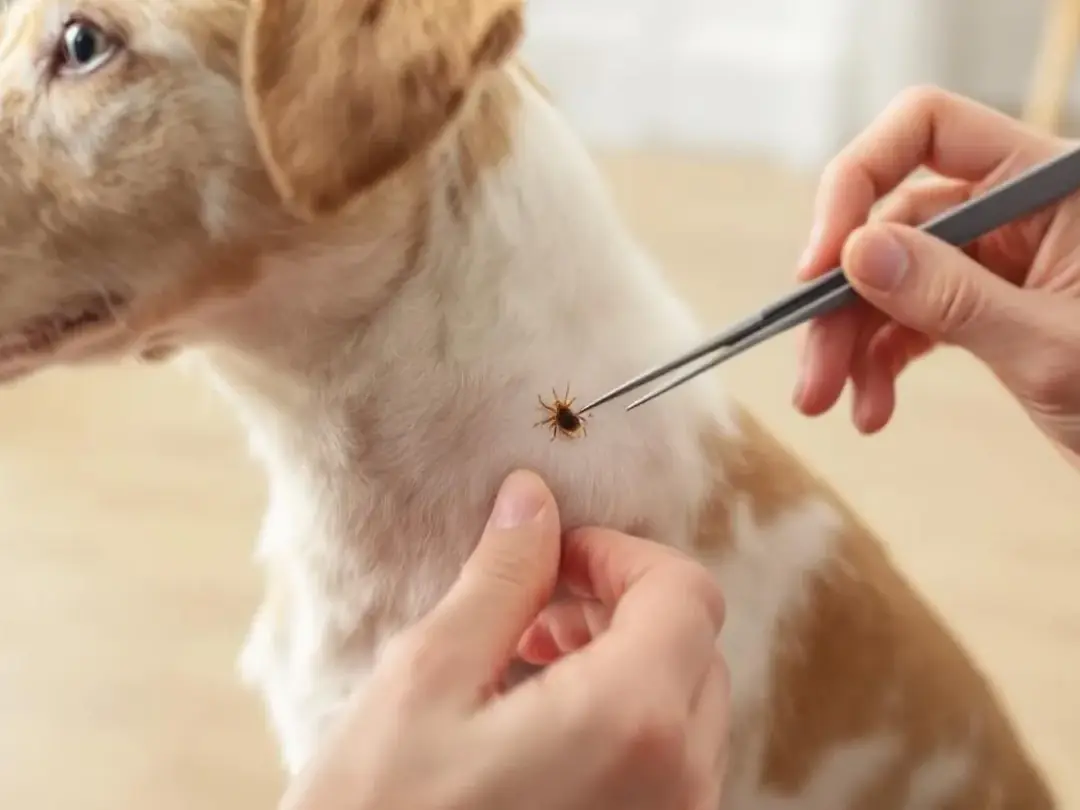
How to Remove an Embedded Tick Safely
Removal should be calm, direct, and careful.
Use fine-tipped tweezers or a proper tick removal tool. Grasp the tick as close to the skin as possible and pull upward with steady, even pressure. Do not twist, crush, burn, or smother the tick with home remedies, because those methods can increase irritation and make removal worse.
After removal, clean the site and monitor it. If mouthparts appear to remain or the area becomes inflamed, contact your veterinarian.
The goal is not just to get the tick off. It is to get it off cleanly.
What to Watch for After Removal
After removing a tick, watch the bite site for redness, swelling, discharge, or signs of infection. You should also watch your dog over the next days and weeks for fever, lethargy, limping, appetite loss, shaking, or other unusual symptoms that could suggest tick-borne illness.
Not every tick causes disease, but every tick deserves follow-up attention.
Removal ends the attachment, not the need to pay attention.

How to Prevent Future Tick Bites
The best tick strategy is the one you use consistently.
Use veterinarian-approved tick preventatives year round, check your dog after outdoor activity, keep grass and brush under control around the home, and stay alert during peak tick seasons. Dogs with long or thick coats may need especially careful hands-on checks.
Prevention is much easier than dealing with embedded ticks after they have already fed.
Tick control works best before the tick ever gets a chance to attach.
FAQ
Common Questions About Embedded Ticks on Dogs
These quick answers cover common questions about spotting, removing, and preventing embedded ticks on dogs.
What does an embedded tick look like?
It can look like a small bump, scab, or skin tag at first, then become larger and rounder as it feeds.
Where do ticks usually hide on dogs?
Common hiding spots include behind the ears, under collars, between the toes, and around the groin and armpits.
How should I remove one?
Use fine-tipped tweezers or a tick tool, grasp close to the skin, and pull upward with steady pressure.
Why is quick removal important?
The longer a tick stays attached, the greater the chance of disease transmission.
How do I prevent more ticks?
Use year-round tick prevention, do regular checks, and reduce tick habitat around your home.


