
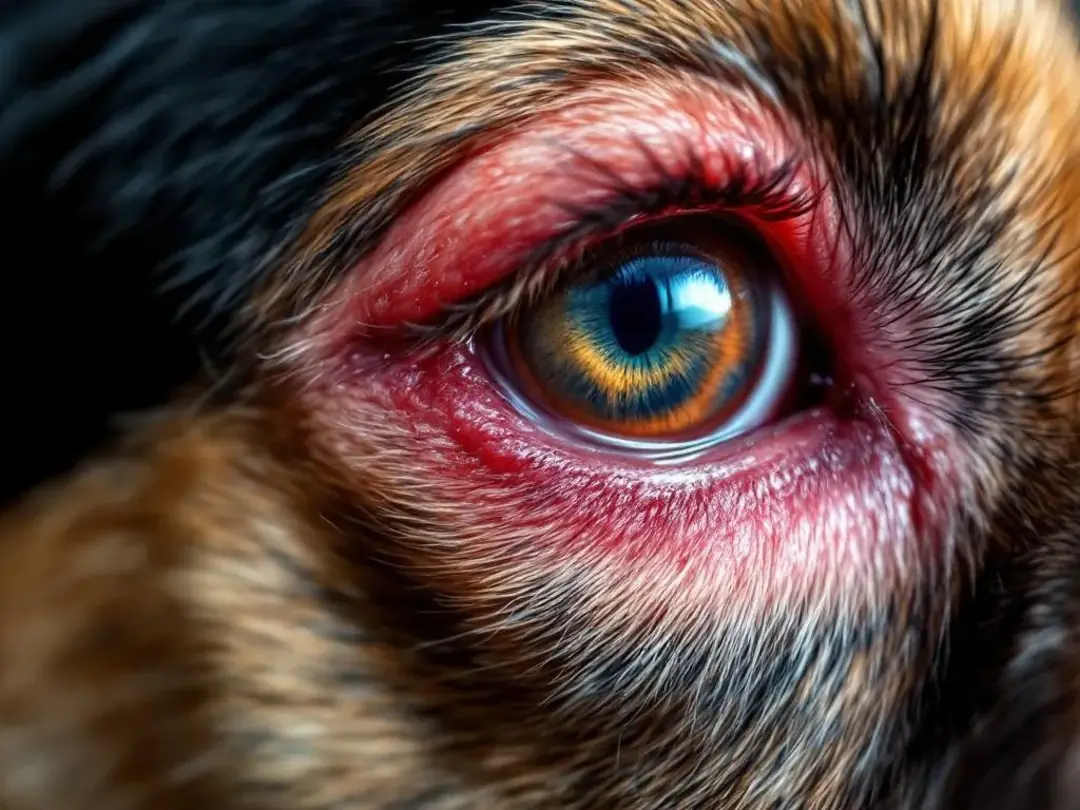

Conjunctivitis in dogs is inflammation of the tissues around the eye, often causing redness, discharge, squinting, and obvious irritation.
If you are researching red eyes, discharge, and common dog health issues, our canine food allergies guide is a useful next read because allergies are one of the common reasons dogs develop recurring eye inflammation.
Key Takeaways
- Conjunctivitis causes red, irritated, swollen eyes and often visible discharge.
- Common causes include infection, allergies, irritants, dry eye, and eyelid problems.
- Different causes can look similar, so diagnosis matters.
- Treatment depends on the underlying cause, not just the redness itself.
- Prompt veterinary care helps prevent complications and protects vision.
What Is Conjunctivitis in Dogs?
Conjunctivitis is inflammation of the conjunctiva, the thin tissue that lines the eyelids and covers the white part of the eye. When it becomes inflamed, the eye often looks red, swollen, watery, or coated with discharge.
Owners often call this "pink eye," but in dogs that label can hide a wide range of possible causes. The redness is real, but the reason behind it can vary a lot.
Conjunctivitis is a visible problem with many possible explanations.
Common Causes of Red and Irritated Eyes
Common causes include bacterial infection, viral disease, allergies, environmental irritants, dry eye, foreign material, eyelid abnormalities, and blocked tear drainage. Some dogs have a simple short-term irritation, while others have a chronic underlying problem that keeps the eyes inflamed.
That is why two dogs with equally red eyes may need very different treatment plans.
The eye may look the same, even when the cause is not.
Common Symptoms of Conjunctivitis
The signs are often easy to see, even before the cause is known.
Common signs include redness, swelling, squinting, blinking, tearing, discharge, pawing at the eye, and rubbing the face. Discharge may be clear, white, yellow, or green depending on the cause and whether infection is involved.
Some dogs also become light-sensitive or seem less willing to play, go outside, or keep the eye open normally.
When the eye hurts, dogs often show it with behavior before they show it with words you wish they had.
Why Diagnosis Matters
Conjunctivitis is not one single disease. It is a sign of inflammation, and the treatment depends on what is causing it. A dog with dry eye, a corneal ulcer, allergies, or a bacterial infection may all look red-eyed at first glance.
That is why guessing with leftover eye medication or home remedies can be risky. The wrong treatment can delay recovery or even make the eye worse.
In eye disease, treating the wrong cause can be as dangerous as treating nothing at all.
How Vets Diagnose Pink Eye in Dogs
Diagnosis often involves more than just looking at the eye.
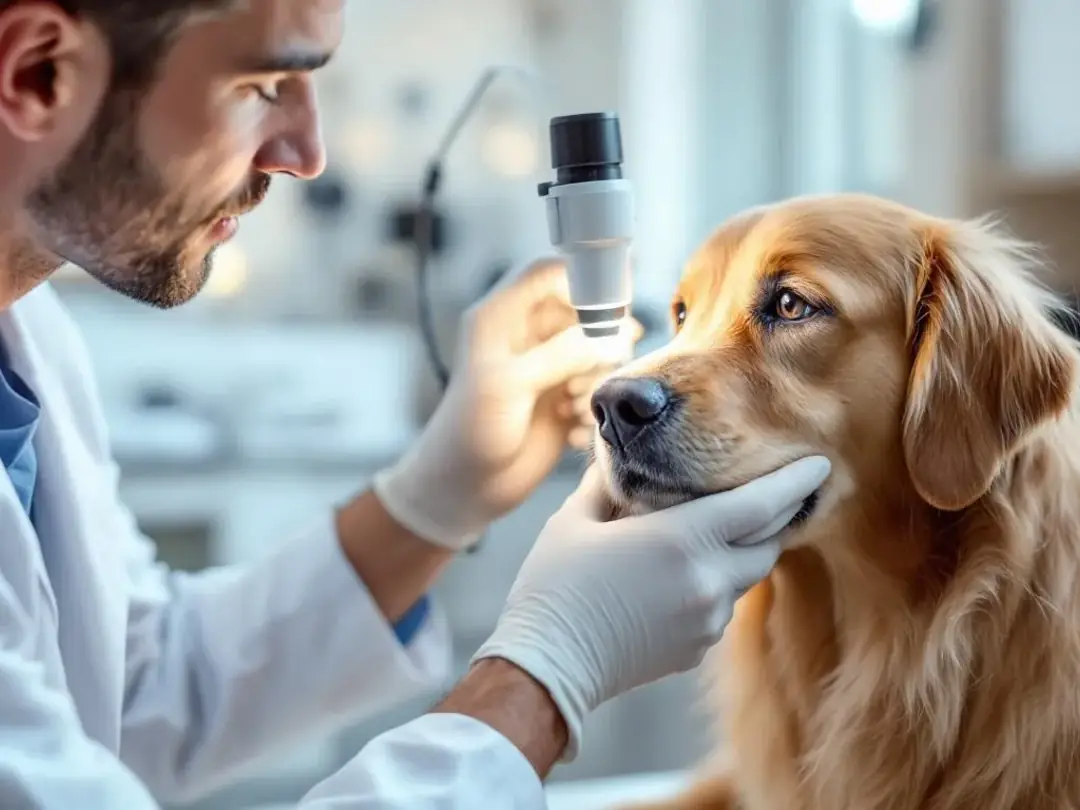
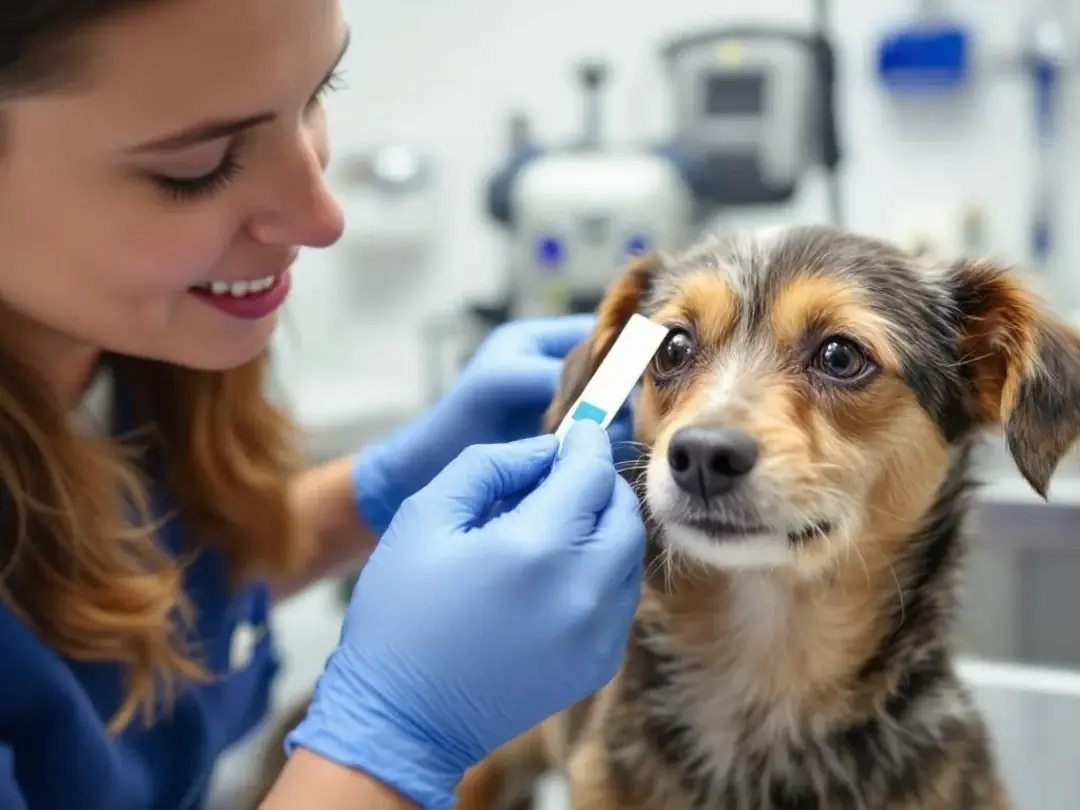
Veterinarians may perform a full eye exam, Schirmer tear testing, fluorescein stain testing, pressure measurement, and sometimes cytology, culture, or additional workup depending on the case. These tests help rule out dry eye, corneal ulcers, glaucoma, infection, and other important causes.
The goal is not just to confirm inflammation. It is to identify what is driving it.
Good eye medicine starts with asking what the redness is protecting you from missing.
Treatment for Conjunctivitis in Dogs
Treatment depends on the cause. Dogs may need antibiotic eye drops, anti-inflammatory medication, tear stimulation therapy, allergy management, foreign body removal, or correction of eyelid problems. Some cases need only short-term treatment, while others require long-term management.
Supportive care, such as preventing rubbing and keeping the eye area clean, also helps recovery.
The redness may be the symptom, but the treatment belongs to the cause.
Recovery and Long-Term Outlook
Many dogs recover well, but the timeline depends on the cause.
Simple bacterial or irritant-related cases may improve quickly with treatment. Chronic conditions such as dry eye or immune-mediated disease may require ongoing therapy and monitoring to keep the eyes comfortable and healthy.
Early treatment usually improves the outlook and lowers the risk of complications such as corneal damage or chronic inflammation.
Fast treatment protects more than comfort. It protects the future of the eye.
When to See a Veterinarian
See a veterinarian promptly if your dog has red eyes, discharge, squinting, obvious pain, cloudiness, vision changes, or symptoms that are getting worse. Eye problems can deteriorate quickly, and some causes of conjunctivitis are more serious than they first appear.
If the eye looks painful or the dog cannot keep it open, that should be treated as urgent.
With eyes, waiting is often the most expensive decision.
FAQ
Common Questions About Conjunctivitis in Dogs
These quick answers cover common questions about causes, symptoms, diagnosis, treatment, and when eye redness becomes urgent.
What is conjunctivitis in dogs?
It is inflammation of the conjunctiva, the tissue lining the eyelids and covering the white part of the eye.
What causes red eyes and discharge?
Common causes include infection, allergies, irritants, dry eye, and eyelid or tear drainage problems.
Can I treat it at home without a vet?
That is risky, because different eye problems can look similar and the wrong treatment can make the eye worse.
How do vets diagnose the cause?
They may use an eye exam, tear testing, stain testing, pressure checks, and other diagnostics depending on the case.
When is conjunctivitis urgent?
It is urgent if the eye is painful, cloudy, hard to open, or if vision seems affected.


