


Canine warts are usually benign growths caused by canine papillomavirus, most often seen in younger dogs or dogs with less mature immune defenses.
If you are researching viral skin growths, contagious dog conditions, and oral lesions, our canine skin infections guide is a useful next read if you are trying to sort warts from other common skin and mouth problems.
Key Takeaways
- Canine warts are usually benign growths caused by canine papillomavirus.
- They are most common in young dogs and often go away on their own.
- Warts can spread between dogs but do not spread to humans.
- Treatment is often unnecessary unless the warts are painful, infected, or interfering with function.
- Veterinary evaluation matters if a growth looks unusual, changes quickly, or does not resolve.
What Are Canine Warts?
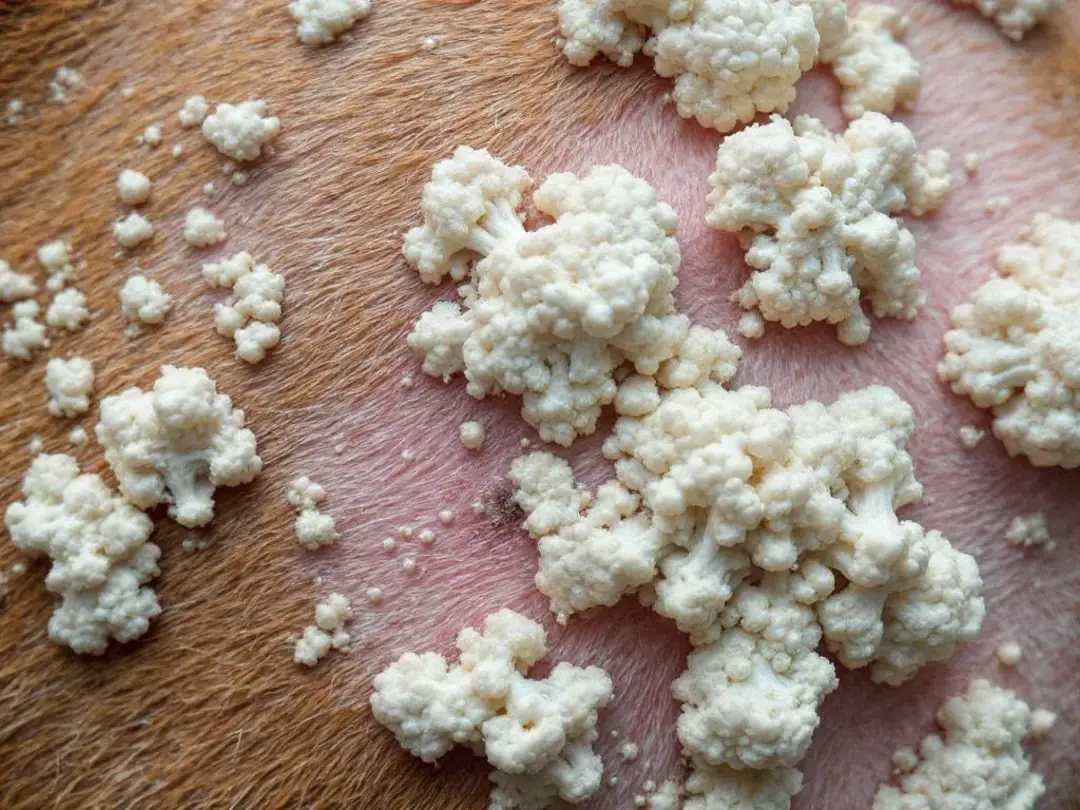
Canine warts are benign growths caused by canine papillomavirus. They often appear as rough, cauliflower-like bumps on the lips, mouth, face, feet, or other areas of the body.
Most are not dangerous, but they can look alarming to owners because they appear suddenly and may occur in clusters. Their appearance is often more dramatic than their actual medical significance.
With canine warts, ugly does not automatically mean dangerous.
What Dog Warts Look Like
Their appearance is often distinctive, but not always.
Many warts have a rough, irregular, cauliflower-like surface and may be pink, pale, gray, or darkened as they age. Some are small and isolated, while others appear in clusters, especially around the mouth or lips.
Because other growths can sometimes mimic warts, appearance alone is not always enough to be certain.
A wart may look classic, but a lookalike can still fool you.
How Canine Papillomavirus Spreads
Canine papillomavirus spreads between dogs through direct contact and contaminated objects such as toys, bowls, bedding, or shared environments. Young dogs are especially susceptible because their immune systems are still developing.
The virus is species-specific, which means it spreads between dogs but not to humans or other animal species.
Contagious to dogs does not mean contagious to everyone.
When Warts Usually Go Away on Their Own
In many dogs, the immune system handles the problem without treatment.
Most canine warts in otherwise healthy young dogs regress naturally over several weeks to a few months as the immune system clears the virus. This is why many cases are managed with watchful waiting rather than immediate intervention.
That said, not every growth that looks like a wart should simply be ignored. Monitoring still matters.
Natural resolution is common, but blind assumption is not the same as monitoring.
How Vets Diagnose Canine Warts
Diagnosis often starts with appearance, but may not end there.
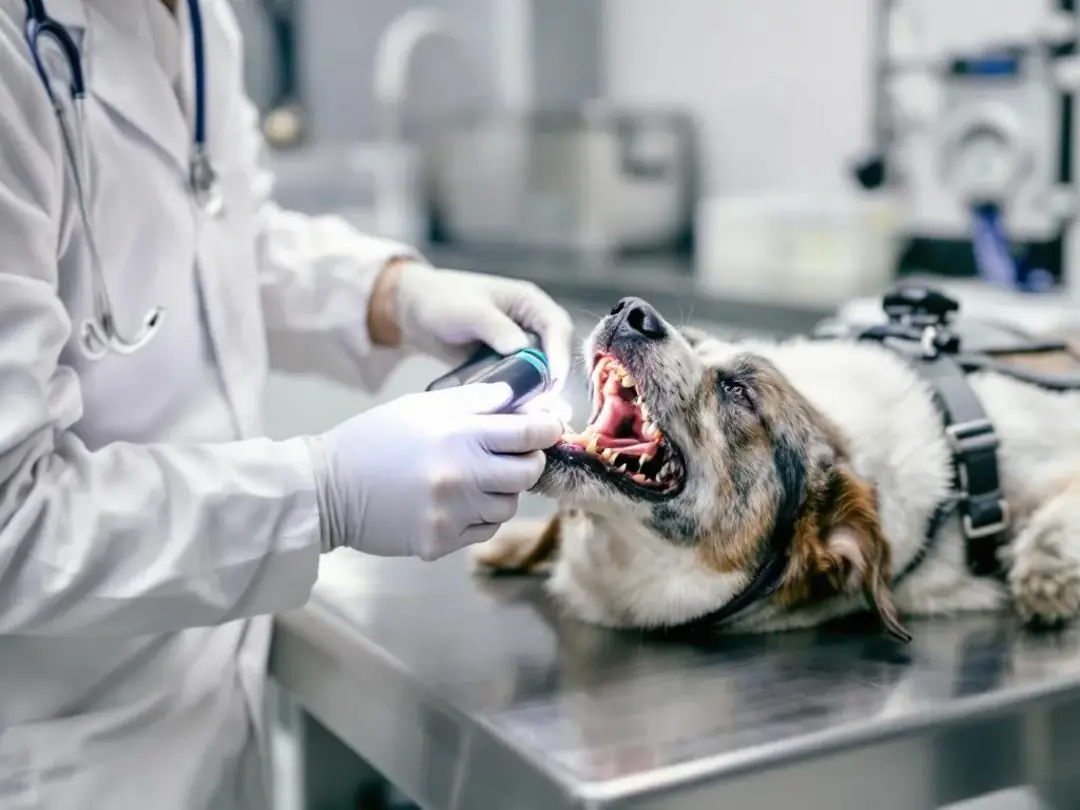
Veterinarians often recognize warts by their typical look and location, but if a growth is unusual, persistent, rapidly changing, or suspicious for something more serious, they may recommend aspiration, biopsy, or removal for testing.
This is especially important in older dogs, where not every bump should be assumed to be a simple viral wart.
When a growth breaks the pattern, the diagnosis should too.
When Treatment Is Needed
Most warts do not need treatment, but some do.
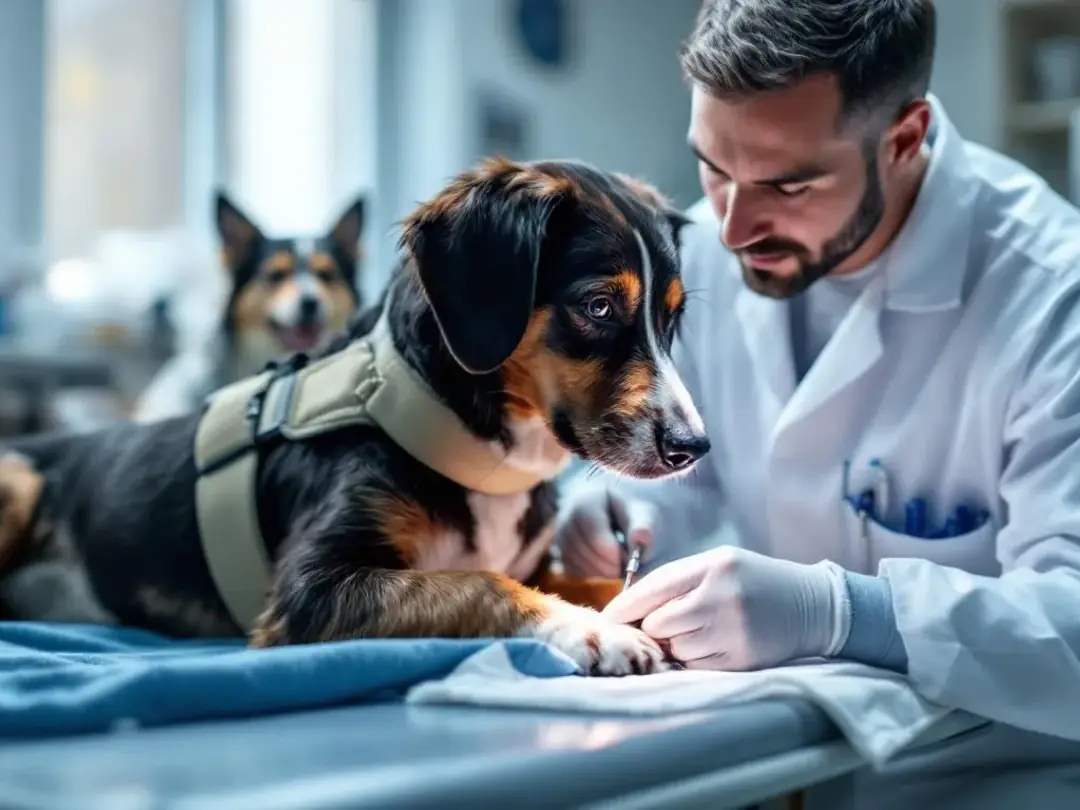
Treatment may be needed if warts interfere with eating, drinking, breathing, walking, or if they become infected, bleed repeatedly, or fail to regress. Options can include surgical removal, cryotherapy, laser treatment, or other veterinary-directed approaches depending on the case.
The goal is not to remove every wart automatically. It is to intervene when the wart is causing a real problem.
Benign does not always mean harmless in practice.
Prevention and Household Management
Prevention focuses on limiting contact with infected dogs, cleaning shared items, and supporting overall immune health. Dogs with visible warts should avoid close contact with other dogs until the lesions have resolved.
Good hygiene matters, especially in multi-dog homes, boarding settings, and dog social environments.
With canine warts, prevention is mostly about reducing opportunity.
When to Call the Vet
Call your veterinarian if a wart is growing quickly, bleeding, becoming painful, interfering with normal function, or simply does not look typical. You should also seek care if your dog is older or if the growth is not going away as expected.
Not every wart is urgent, but every unusual growth deserves a thoughtful look.
When a bump stops acting like a simple wart, stop treating it like one.
FAQ
Common Questions About Canine Warts
These quick answers cover common questions about spread, appearance, treatment, and when warts need more attention.
What causes canine warts?
They are usually caused by canine papillomavirus.
Can dog warts spread to humans?
No. Canine papillomavirus is species-specific and does not spread to humans.
Do canine warts usually go away on their own?
Yes. Many resolve naturally over several weeks to a few months.
When do warts need treatment?
Treatment may be needed if they are painful, infected, bleeding, or interfering with normal function.
Why should older dogs with new growths be checked?
Because not every growth in an older dog is a simple wart, and some may need testing.


