


A canine eye ulcer is a painful injury to the cornea that can worsen quickly if it is not treated promptly.
If you are researching dog eye problems and urgent health issues, our canine cataracts guide is a useful next read for another common eye-related condition in dogs.
Key Takeaways
- Eye ulcers are painful corneal wounds that need veterinary attention.
- Common signs include squinting, tearing, redness, discharge, and pawing at the eye.
- Trauma, dry eye, eyelid problems, and breed-related anatomy can all contribute.
- Fluorescein stain testing is a common way vets confirm corneal ulcers.
- Deep or complicated ulcers can become emergencies and may need surgery.
What Is a Canine Eye Ulcer?
A canine eye ulcer is a wound or erosion on the cornea, the clear outer surface of the eye. It may be superficial or much deeper, depending on how much of the cornea is affected.
Even a small ulcer can be very painful because the cornea is highly sensitive. That is why dogs with eye ulcers often look dramatically uncomfortable even when the injury itself seems small from the outside.
With corneal ulcers, pain can be out of proportion to what owners think they see.
Common Causes of Eye Ulcers in Dogs
Trauma is one of the most common causes. A scratch from a plant, another animal, rough play, or rubbing the eye can all damage the cornea. Dry eye, eyelid abnormalities, abnormal eyelashes, and breed-related eye exposure can also make ulcers more likely.
That is why some dogs get a one-time ulcer from an accident, while others are more prone because of ongoing eye structure or tear film problems.
The ulcer may be the event you notice, but the reason behind it may be bigger than one scratch.
Common Symptoms of a Canine Eye Ulcer
Most dogs with an eye ulcer look obviously uncomfortable.
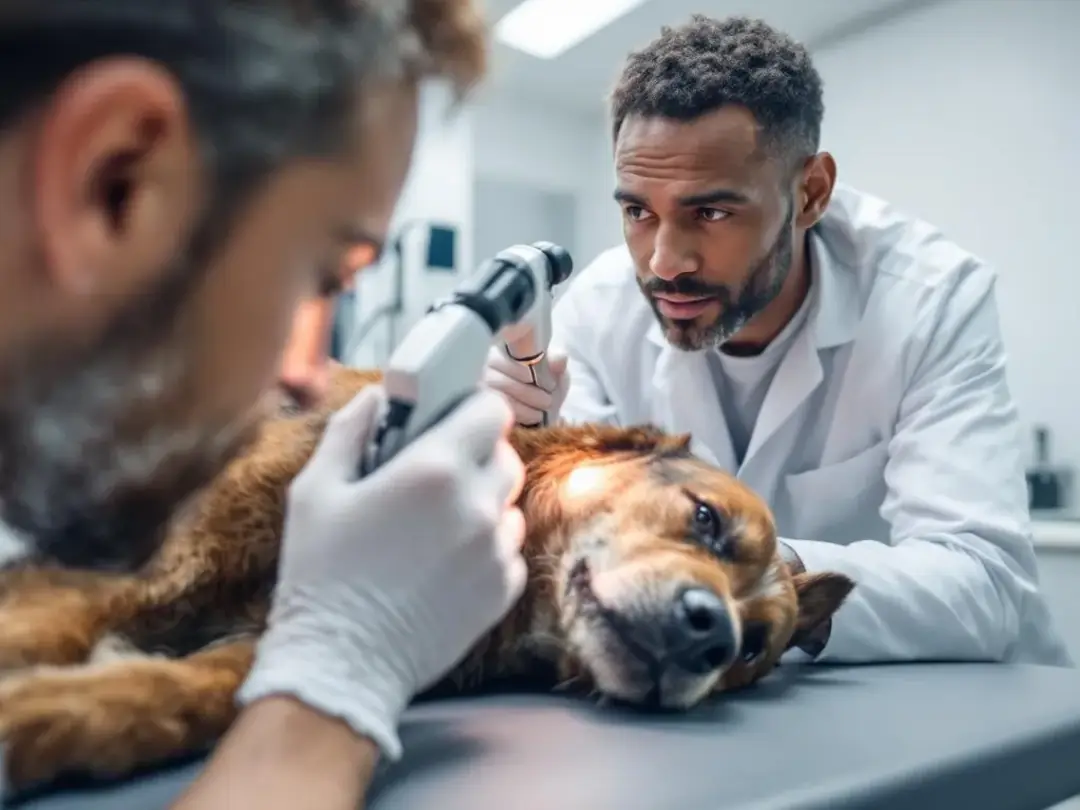
Common signs include squinting, tearing, redness, discharge, cloudiness, pawing at the eye, rubbing the face, and sensitivity to light. Some dogs keep the eye partly or fully closed because it hurts too much to hold open normally.
If the ulcer is deeper or infected, the eye may look more cloudy, more swollen, or more dramatically painful over time.
When a dog suddenly cannot tolerate its own eye, take that seriously.
How Vets Diagnose Corneal Ulcers
Veterinarians commonly use fluorescein stain testing to diagnose corneal ulcers. The stain highlights damaged areas of the cornea and helps show whether an ulcer is present.
They may also check tear production, look for eyelid or eyelash problems, measure eye pressure, and evaluate whether infection or deeper damage is involved. The goal is not just to confirm the ulcer, but to understand how serious it is and why it happened.
With eye ulcers, diagnosis is about depth, cause, and urgency.
Treatment for Canine Eye Ulcers
Treatment depends on whether the ulcer is simple or complicated.
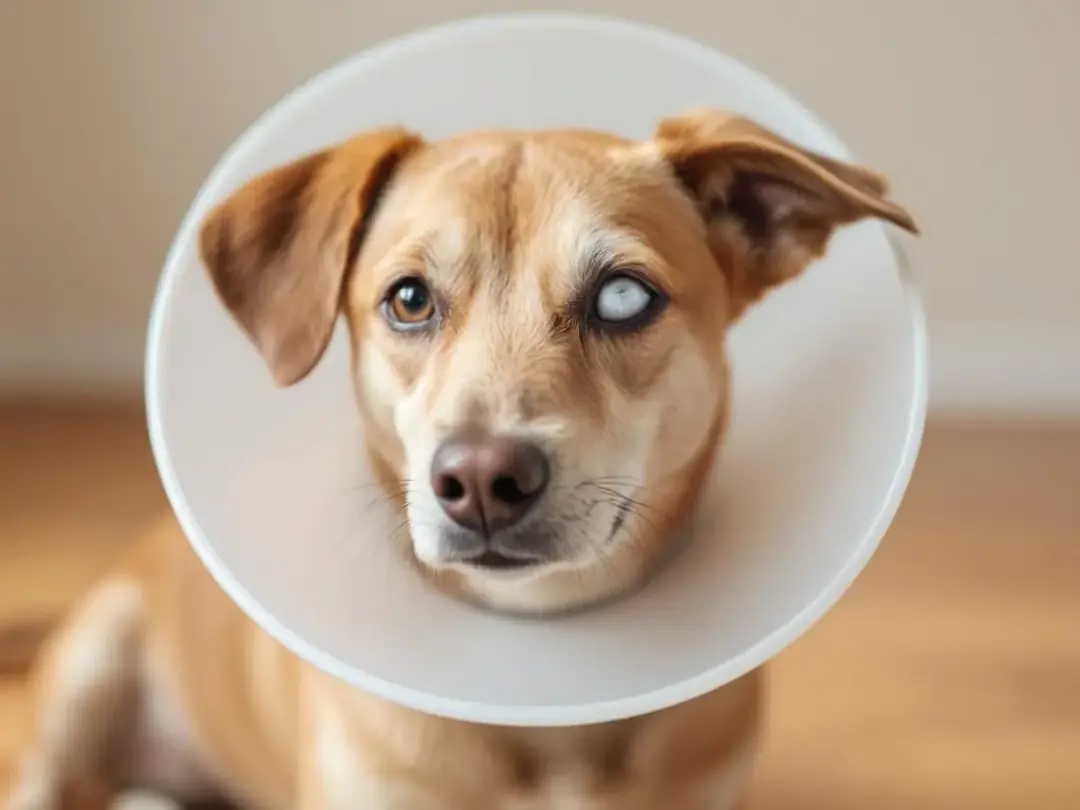
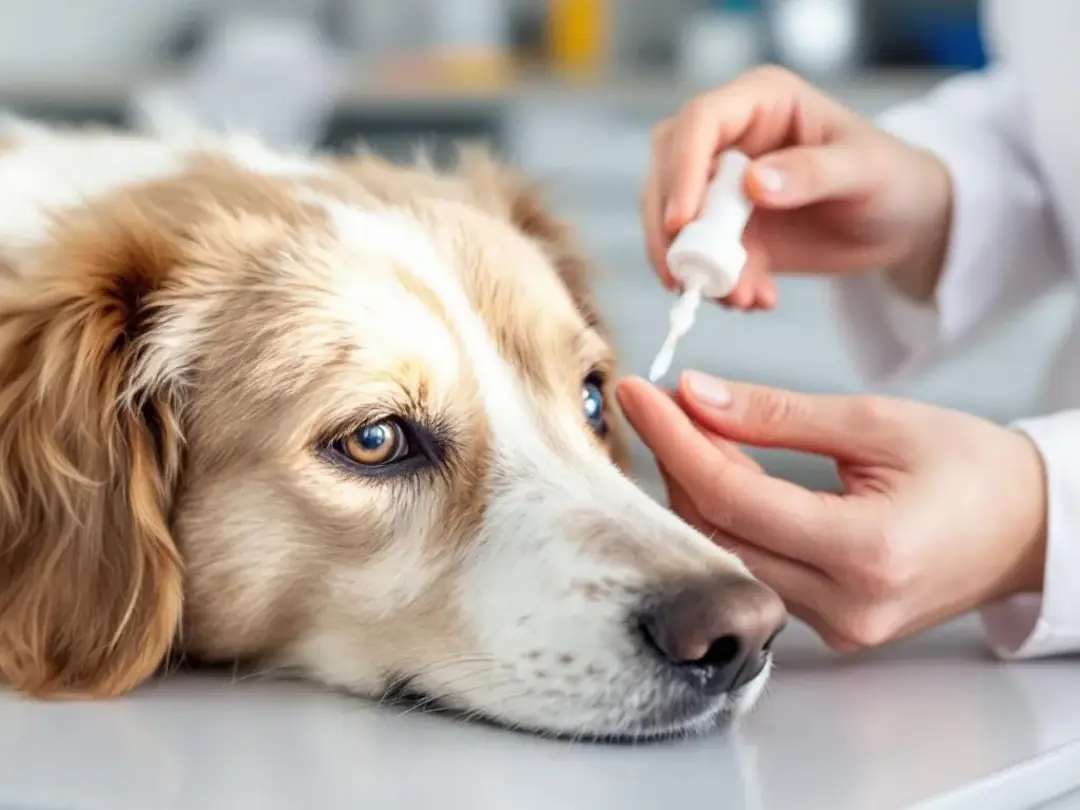
Simple ulcers may be treated with antibiotic eye medication, pain control, and an Elizabethan collar to stop rubbing. More complicated ulcers may need more intensive medication, debridement, grafting, or other surgical procedures.
The treatment plan depends on depth, infection risk, healing behavior, and whether the cornea is in danger of rupturing.
Not every ulcer is an emergency, but some absolutely are.
Recovery and Follow-Up
Follow-up matters because the eye can change quickly.
Many simple ulcers heal within days when treated properly, but they still need rechecks to confirm the cornea is actually healing. Owners should not stop medication early just because the dog seems more comfortable.
Complicated ulcers may need repeated exams, treatment changes, or specialist care. The eye can look better and still not be safe yet.
Comfort is a good sign, but healing is what the recheck confirms.

When an Eye Ulcer Is an Emergency
Some eye ulcers can become emergencies very fast.
Seek urgent veterinary care if the eye looks suddenly worse, the dog is in severe pain, the cornea looks deeply cloudy or sunken, discharge becomes heavy, or the eye seems to be changing shape. Deep ulcers and melting ulcers can progress quickly and threaten the eye itself.
Eye pain should never be treated as a wait-and-see issue for long. The cornea does not give much room for delay.
With a painful eye, speed protects vision.
FAQ
Common Questions About Canine Eye Ulcers
These quick answers cover common questions about symptoms, diagnosis, treatment, and when corneal ulcers become urgent.
What is a canine eye ulcer?
It is a wound or erosion on the cornea, the clear outer surface of the eye.
What are common symptoms?
Squinting, tearing, redness, discharge, cloudiness, and pawing at the eye are common signs.
How are eye ulcers diagnosed?
Veterinarians commonly use fluorescein stain testing to confirm corneal ulcers.
Can eye ulcers heal with medication alone?
Some simple ulcers can, but deeper or complicated ulcers may need more advanced treatment or surgery.
When is it an emergency?
It is urgent if the eye is very painful, worsening quickly, heavily discharging, or looks deeply damaged.


