


Yes, dogs can watch TV, but they do not experience it the same way humans do.
If you are researching dog behavior, sensory differences, and unusual reactions to screens or sounds, our can dogs see spirits guide is a useful next read for another topic where dogs seem to notice things people miss.
Key Takeaways
- Dogs can see and react to television, especially on modern screens.
- Dogs see color and motion differently than humans do.
- Many dogs are most interested in animals, movement, and familiar sounds on TV.
- Some dogs enjoy TV, while others ignore it completely.
- TV can be enrichment for some dogs, but it should not replace exercise or interaction.
Can Dogs Actually Watch TV?
Yes. Many dogs can see television well enough to notice movement, animals, and certain sounds. That does not mean every dog cares, but it does mean TV is not just meaningless flicker to all of them.
Modern screens have made this easier. Older televisions were less dog-friendly because of how motion appeared, while newer screens tend to look smoother and more watchable.
Dogs can watch TV. The bigger question is whether your dog wants to.
How Dogs See Screens Differently
Dogs do not see color the same way humans do, and they are especially tuned to movement. They are more likely to notice motion and contrast than to care about the full color detail people enjoy.
That is one reason dogs often react more strongly to running animals, quick movement, or sudden sound than to dialogue-heavy scenes. What matters to them is not always what matters to you.
Dogs are not watching TV like people. They are scanning it like dogs.
What Dogs Usually React to on TV
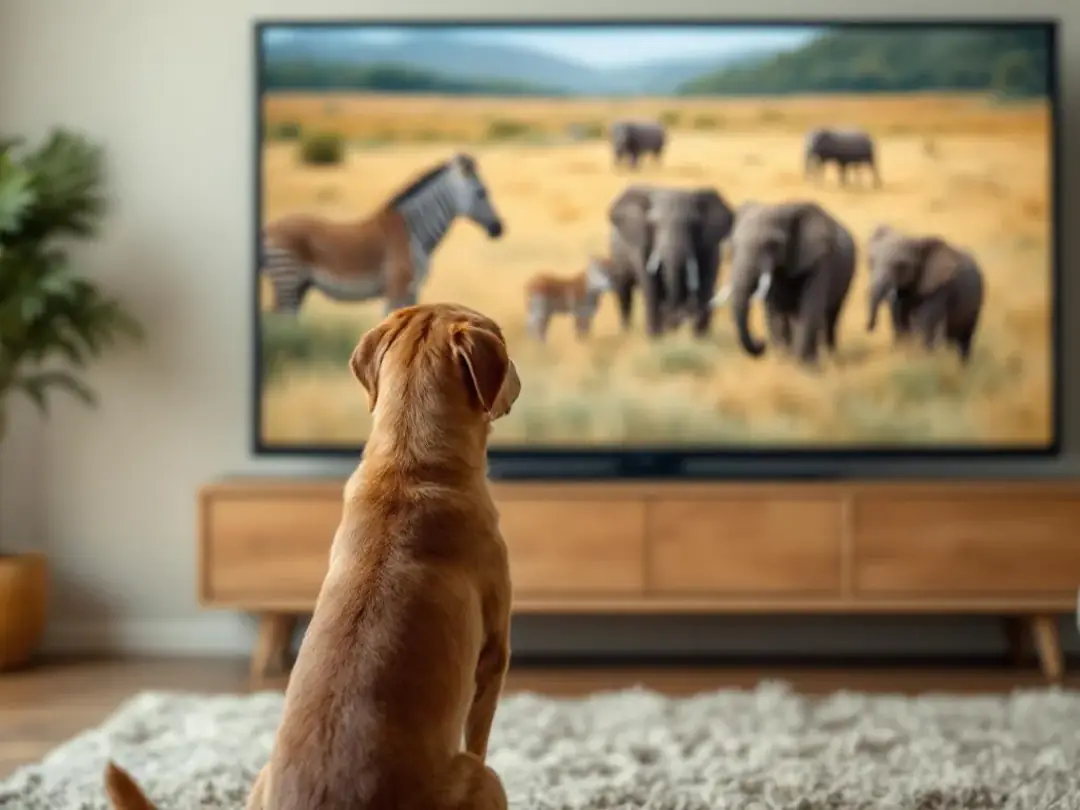
Many dogs react most to other animals, barking, squeaky sounds, doorbells, and fast movement. Wildlife footage, dogs on screen, and certain sound effects tend to get the strongest response.
Some dogs will approach the screen, bark back, or look behind the TV. Others may simply watch for a few seconds and move on. Both reactions are normal.
Interest in TV is less about the screen itself and more about what the dog thinks it is noticing.
Why Some Dogs Love TV and Others Ignore It
Not every dog is interested in screens, and that is completely normal.
Breed tendencies, age, personality, and general alertness all play a role. Some dogs are highly visual and reactive. Others care much more about smell, touch, or what is happening in the real room around them.
A dog that ignores TV is not missing anything important. A dog that loves it is not necessarily unusual either.
TV interest is a personality trait more than a skill.
Do Dogs Think TV Is Real?
Probably not in the same way humans understand reality, but dogs may still respond as if something on screen matters. They can recognize movement and sound, even if the missing scent cues make the whole thing less convincing than real life.
That is why some dogs bark at animals on screen and then lose interest quickly. The image gets their attention, but the rest of the sensory picture does not fully match.
Dogs may react to TV as meaningful without fully treating it as real.
Should You Leave the TV On for Your Dog?
Sometimes it helps, but it depends on the dog.
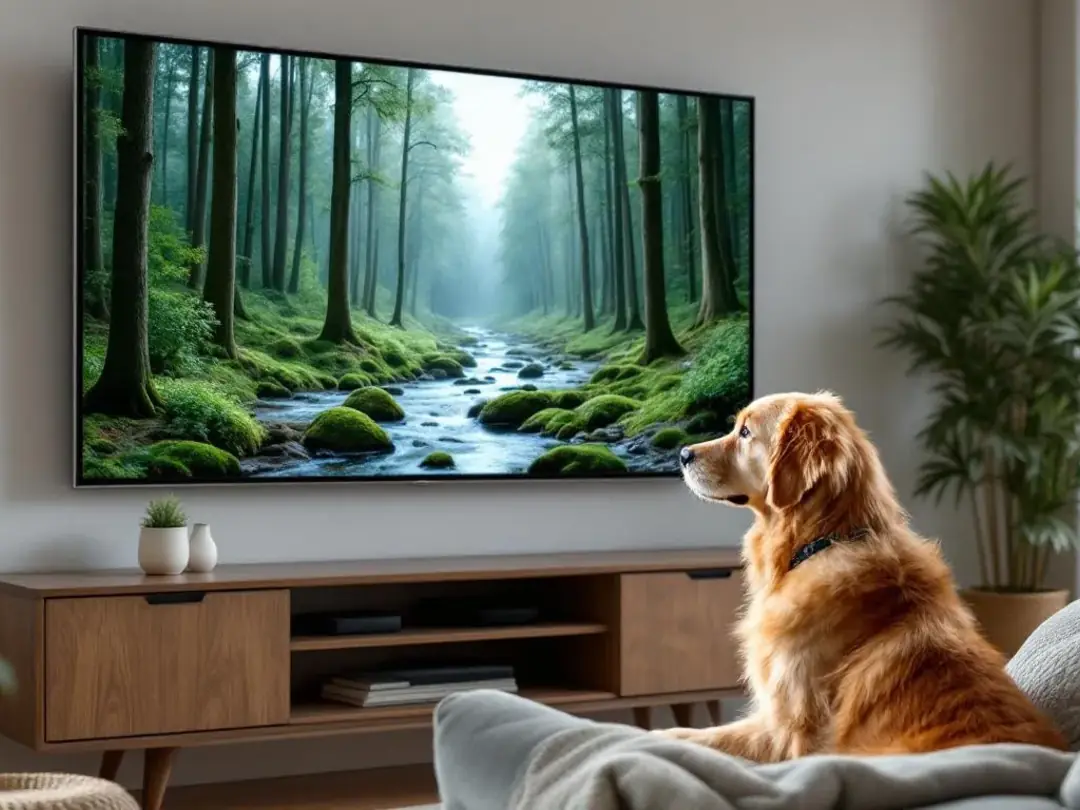
For some dogs, background TV or calm sound can make the house feel less empty. For others, it does nothing at all. And for a few, it may actually be overstimulating if the content is noisy or exciting.
TV can be a small enrichment tool, but it should not replace exercise, training, play, or human interaction. It is a supplement, not a solution.
If TV helps your dog relax, great. If not, there is no reason to force it.
How to Make TV Time Better for Dogs
If your dog enjoys TV, choose calmer or more interesting content based on how they react. Animal footage, nature scenes, and dog-focused programming often work better than random loud shows.
Keep the volume reasonable, give your dog a comfortable place to settle, and watch for signs of stress or overstimulation. The goal is mild interest or comfort, not frantic barking at the screen.
Good TV time for dogs should look more like enrichment than chaos.
When TV Watching Becomes a Problem
If your dog becomes obsessive, anxious, aggressive toward the screen, or unable to settle, TV is no longer helping. In that case, it is better to reduce or stop it.
Any enrichment tool can become the wrong tool if it creates stress. If your dog seems overstimulated, switch to calmer activities or talk with your veterinarian or trainer if the behavior is intense.
Entertainment is only useful when it actually leaves the dog better off.
FAQ
Common Questions About Dogs Watching TV
These quick answers cover common questions about screens, color, sound, and whether TV is actually useful for dogs.
Can dogs really watch TV?
Yes. Many dogs can see and react to television, especially on modern screens.
Do dogs see TV the same way humans do?
No. Dogs see color and motion differently, so their experience of TV is not the same as ours.
Why does my dog bark at animals on TV?
Movement, barking, and animal sounds can trigger a natural response even if the dog knows it is not fully real.
Should I leave the TV on for my dog?
Sometimes, if it helps your dog relax, but it should not replace exercise, play, or interaction.
What if my dog gets too worked up by TV?
Turn it off or switch content. If TV causes stress or obsession, it is not the right enrichment tool for that dog.


