


Choosing the right carrier size for your furry friend should not feel like solving a complex puzzle. Yet many pet owners find themselves overwhelmed by varying airline requirements, IATA guidelines, and the critical need to ensure their pet's safety and comfort. Getting the carrier size wrong does not just mean inconvenience — it can result in denied boarding or an unsafe journey for your beloved companion.
This airline pet carrier size guide breaks down what you need to know about carrier dimensions, measurement techniques, and airline-specific requirements. Whether you are planning domestic flights or international travel, the goal is to help you compare options more confidently and avoid common mistakes before travel day.
If you are planning puppy travel, it can also help to review our flying with a puppy guide and our overview of puppy delivery options before you book a trip.
Standard Airline Pet Carrier Size Requirements
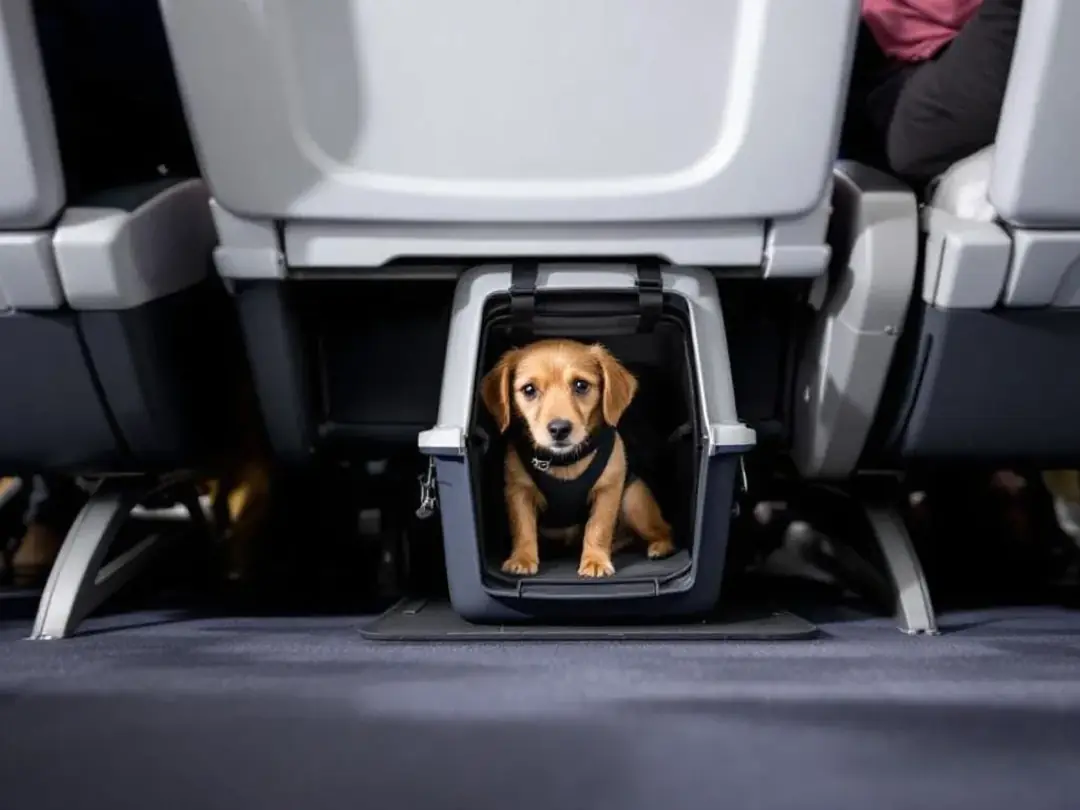
Most airlines require pet carriers to fit completely under the seat in front of you, with typical maximum dimensions around 18" x 11" x 11". However, these measurements can vary significantly between airlines, aircraft types, and even cabin layouts.
The fundamental rule across most airlines remains consistent: your pet should be able to stand, turn around, sit, and lie down comfortably inside the carrier in a natural position. This standard comes from broader animal welfare guidance and is one of the most important factors in choosing the right size.
Key universal requirements often include:
- Combined weight of pet and carrier typically cannot exceed 20 pounds for carry-on pets.
- The carrier must fit entirely under the seat with no portion extending into the aisle.
- Adequate ventilation should be provided through multiple sides.
- The carrier should be secure and escape resistant.
For checked pets traveling in cargo, different rules apply. These usually require IATA-style hard-sided kennels with minimum dimensions based on your pet's measurements, plus stronger structural and ventilation requirements.
Delta Air Lines allows carriers up to 18" x 11" x 11", while United permits slightly smaller dimensions at 17.5" x 12" x 7.5". American Airlines is more generous on some mainline aircraft with a 19" x 13" x 9" maximum, though regional American Eagle flights can be more restrictive.
The common 20-pound limit includes both your pet and the carrier itself. That means a 3-pound carrier leaves only 17 pounds for your pet if you want to stay within the airline's carry-on threshold.

How to Measure Your Pet for the Right Carrier Size
Proper measurement is one of the most important parts of choosing an airline-approved pet carrier. Always measure your pet in a natural standing position, not while lying down, stretching, or compressed.
Essential measurements include:
Length: Measure from the tip of your pet's nose to the base of the tail, not including the tail itself.
Height: Measure from the floor to the highest point, usually the top of the head or ear tip, whichever is higher.
Width: Measure across the widest part of the body, often at the shoulders.
Elbow joint height: Some cargo kennel calculations also use the floor-to-elbow measurement when determining minimum internal height.
For brachycephalic breeds like pugs, bulldogs, and Persian cats, it is smart to allow extra room beyond the basic formula. These snub-nosed animals often need more ventilation space and may be more sensitive to heat and travel stress.
Special considerations:
- Service animals may follow different travel rules depending on the airline and route.
- Senior pets with mobility issues may benefit from slightly larger carriers.
- Anxious pets may settle better with a carrier that does not feel overly cramped.
Take measurements when your pet is calm and standing on a flat surface. If possible, have another person help hold your pet steady so you can get more accurate numbers.
Calculating Minimum Carrier Dimensions
Once you have your pet's measurements, you can estimate the minimum internal carrier size needed for safe and comfortable travel. The goal is not just to fit your pet inside, but to allow normal posture and basic movement.
A simple starting formula is:
- Length: Nose-to-tail length plus 2-4 inches.
- Height: Standing height plus 2-3 inches.
- Width: Body width plus about 2 inches on each side.
For example, if your cat measures 14 inches long, 10 inches tall, and 6 inches wide, a reasonable minimum carrier target might be 16-18 inches long, 12-13 inches high, and about 10 inches wide.
Snub-nosed breeds may need even more room than these basic calculations suggest. If your dog already fits close to the upper end of a carry-on size limit, it is worth checking the airline's breed and temperature policies before booking.
Also remember to account for bedding thickness, interior bowls, and structural features that reduce usable space. Some hard-sided carriers lose interior room because of bolts, door framing, or molded plastic contours.
Major Airline Carry-On Size Restrictions
Each major airline has its own size restrictions, and those differences can matter a lot when you are choosing a carrier.
This quick comparison table makes it easier to scan common carry-on size limits before you compare carriers.
| Airline | Maximum Dimensions | Weight Limit | Special Notes |
|---|---|---|---|
| American Airlines | 19" L x 13" W x 9" H | 20 lbs combined | Regional jets: 16" x 12" x 8" |
| Delta Air Lines | 18" L x 11" W x 11" H | Varies by route | Temperature restrictions apply |
| United Airlines | 17.5" L x 12" W x 7.5" H | 20 lbs combined | Strict enforcement |
| Southwest Airlines | 18.5" L x 8.5" W x 13.5" H | No published limit | Pet travel fee required |
| JetBlue Airways | 17" L x 12.5" W x 8" H | 20 lbs combined | Advance reservations required |
American Airlines can be especially tricky because mainline aircraft and regional jets do not always allow the same carrier size. Delta may apply temperature restrictions on certain routes, and United is known for stricter enforcement of size rules at check-in.
International flights can add another layer of complexity with destination entry rules, health certificate requirements, and age restrictions. If you are traveling with a young dog, our flight nanny for puppies guide may also help you compare alternatives to standard airline travel.
Cargo Kennel Size Requirements
For larger pets or those that exceed cabin size restrictions, cargo travel requires IATA-style kennels with more extensive safety and size requirements. These hard-sided containers need to withstand handling while providing ventilation and enough room for the pet to stand and reposition.
Common IATA-style size categories include:
- CR1: Pets up to about 22 lbs.
- CR2: Pets around 23-44 lbs.
- CR3: Pets around 45-66 lbs.
- CR4: Pets around 67-88 lbs.
- CR5: Pets around 89-132 lbs.
Very large dogs may require custom wooden crates built to airline and IATA specifications. These usually need metal hardware, strong ventilation, leak-resistant flooring, and accessible food and water containers.
Important cargo kennel features often include:
- Ventilation on at least three sides.
- Metal nuts and bolts securing the structure.
- Leak-resistant flooring with absorbent bedding.
- Live animal labels and directional arrows.
- Food and water access from outside the kennel.
Some airlines allow compatible pets of the same species to share a kennel if they meet age and weight requirements, but this should always be confirmed directly with the airline before travel.
Soft-Sided vs Hard-Sided Carrier Sizing
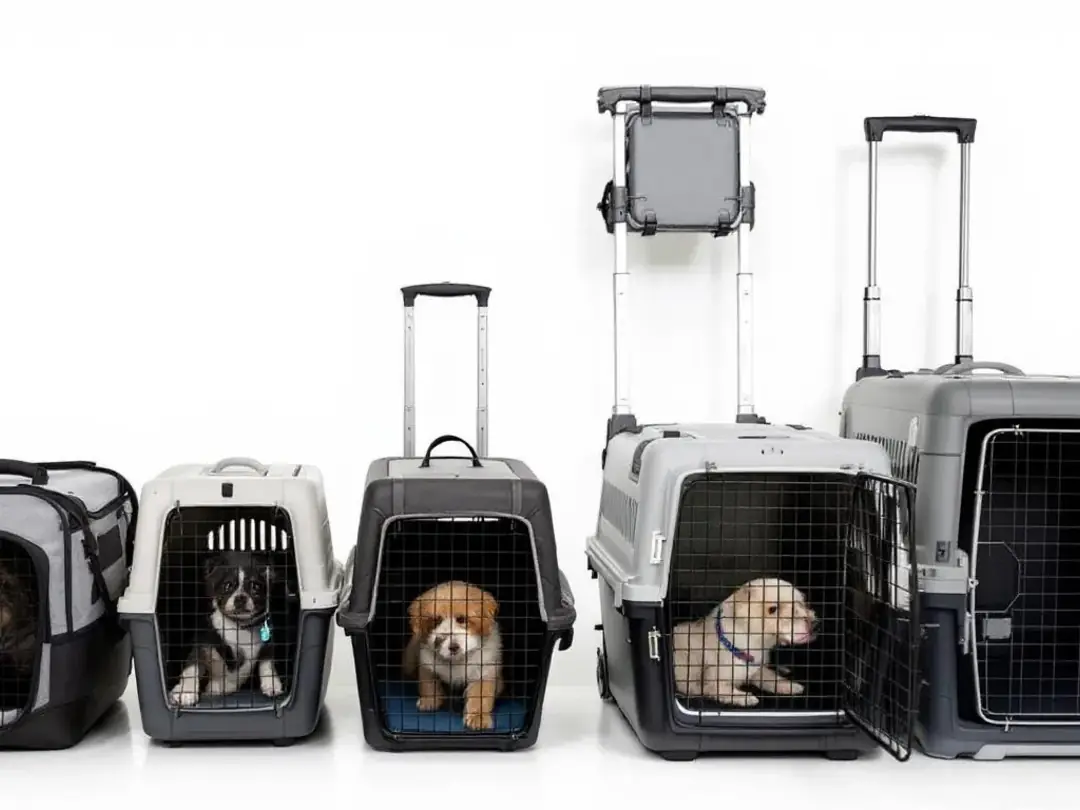
The choice between soft-sided and hard-sided carriers can affect both fit and travel flexibility.
This side-by-side table highlights where each carrier style tends to work best.
| Carrier Type | Main Advantage | Main Limitation | Best Fit |
|---|---|---|---|
| Soft-Sided | Can compress slightly under the seat | Less rigid protection | Carry-on cabin travel |
| Hard-Sided | More structure and security | Less flexible on tight under-seat space | Cargo travel or escape-prone pets |
Soft-sided carriers can be especially useful when the under-seat space is tight, because they may compress slightly where a rigid carrier would be rejected. They also tend to weigh less, which matters when the airline uses a combined pet-and-carrier weight limit.
Hard-sided carriers provide more structure and can feel more secure for some pets, especially those that are strong, anxious, or more likely to test zippers and seams. They are also the standard for most cargo travel.
When you are close to the 20-pound combined limit, carrier weight matters. A 5-pound hard carrier leaves less room for your pet than a 2-pound soft carrier, so always weigh both together before travel day.
Special Size Requirements for Different Pet Types
Different animals and certain breeds need more tailored sizing decisions than a simple one-size-fits-all formula can provide.
Brachycephalic breeds: Snub-nosed dogs and cats often need more room and better airflow than standard calculations suggest. They may also face seasonal or route-based airline restrictions.
Cats: Cats often need less height than dogs, but they still need enough room to stand, turn, and settle naturally. Large cat breeds may need carriers closer to small-dog sizing.
Multi-pet travel: Some airlines allow two compatible small pets of the same species to share a carrier, but this depends on total weight, age, and airline policy.
Senior pets: Older animals with stiffness or mobility issues may benefit from slightly larger carriers and more supportive bedding.
Service animals may follow different travel rules, while emotional support animals generally do not receive the same treatment under current airline policies. Always verify the current airline rules before assuming an exception applies.
Common Sizing Mistakes to Avoid
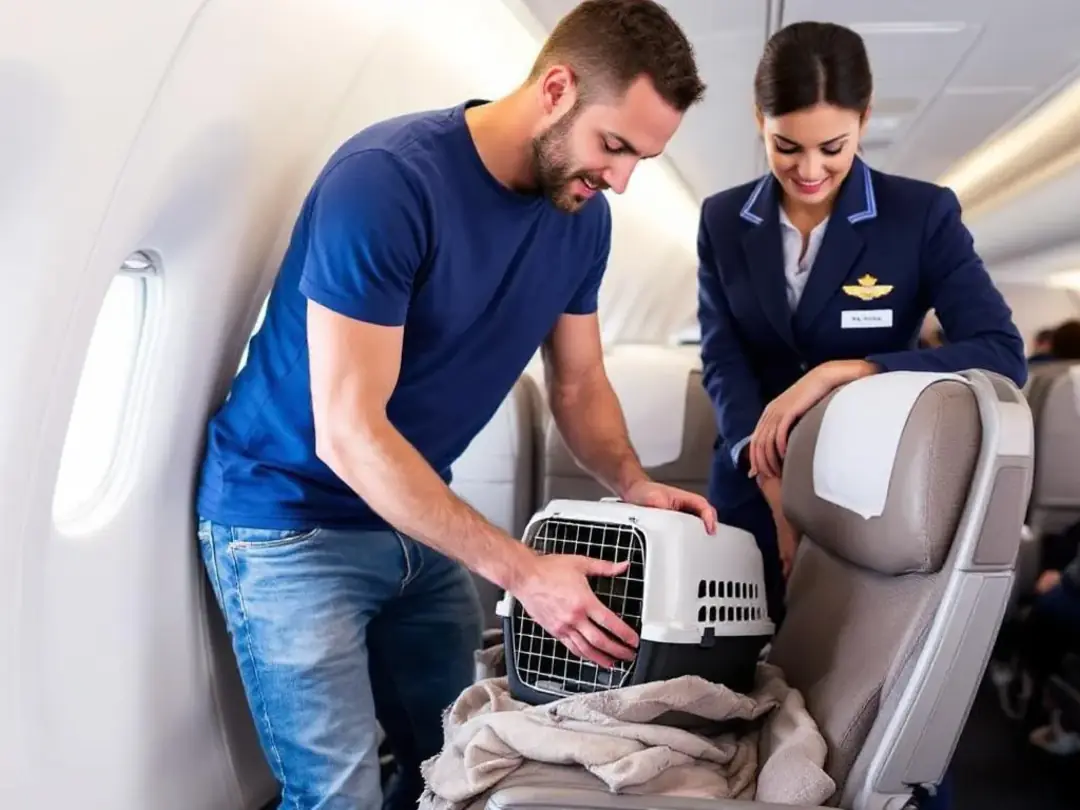
A few common mistakes can create major problems at check-in or make the trip harder on your pet than it needs to be.
Common mistakes include:
- Measuring your pet while lying down instead of standing naturally.
- Forgetting to include ear height for breeds with upright ears.
- Choosing a carrier that is too small just to meet airline limits.
- Ignoring the carrier's own weight when checking the combined limit.
- Assuming all airlines use the same size rules.
- Overlooking special restrictions for snub-nosed breeds.
Choosing a carrier that is too small can increase stress and discomfort, while choosing one that is too large may create fit problems under the seat or allow too much movement during turbulence.
It is also important to verify the exact aircraft type when possible. Regional jets often have tighter under-seat space than larger mainline aircraft, and that difference can matter even when the airline brand is the same.
Whether you are planning a short domestic trip or a more complex international route, careful measurement and airline-specific research can make the process much smoother for both you and your pet.
Key Takeaways
- Always measure your pet standing naturally before choosing a carrier.
- Check both airline size limits and combined pet-plus-carrier weight limits.
- Soft-sided carriers can help with under-seat flexibility, while hard-sided carriers offer more structure.
- Snub-nosed breeds often need extra space and may face additional airline restrictions.
- Verify the exact airline and aircraft rules before travel day to avoid check-in surprises.
FAQ
Common Questions About Airline Pet Carrier Size
These quick answers cover some of the most common questions pet owners have about airline carrier sizing, weight limits, and travel fit.
How do I know if my pet carrier is airline approved?
Check the airline's current size and weight rules, then compare them to the carrier's actual dimensions and your pet's measurements. Approval depends on both the carrier and the pet fitting safely within the airline's policy.
Can a soft-sided carrier be slightly bigger than the listed limit?
Sometimes a soft-sided carrier can compress slightly under the seat, but you should not rely on that as a guarantee. Airlines can still reject a carrier that appears too large.
What if my pet is under the weight limit but too tall for the carrier?
Height still matters. Your pet should be able to stand and rest naturally, so being under the weight limit does not automatically mean the carrier is the right size.
Do all airlines use the same pet carrier dimensions?
No. Airline rules vary, and some aircraft types within the same airline can have different under-seat space limits, especially on regional jets.
Are hard-sided carriers allowed for carry-on pet travel?
Some airlines allow them if they fit the under-seat space, but hard-sided carriers are less flexible than soft-sided options and may be harder to use on tighter aircraft layouts.
Should I contact the airline before flying with a pet?
Yes. It is smart to confirm the current pet policy, aircraft restrictions, reservation requirements, and any route-specific rules before travel day.


